Plants · Edible

Edible plants
of La Saladita.

Wild fruit, greens, seeds and drinks from the plants that grow here, with their seasons and the poisonous plants they can be mistaken for.

109 species · La Saladita · Guerrero, México

This page gathers the 109 plants recorded within about 25 km of the village that have a documented food use, from Mexican sources such as CONABIO, INECOL and UNAM guides and ethnobotany studies, and from international food-plant compilations; each card lists its own sources. Each card says which part is eaten and how, as the source describes it.

Know these first

Don’t eat these by mistake

Pairs of a food plant and a poisonous plant that looks like it, with the way to tell them apart that the source gives.
CAN BE CONFUSED WITH
Dangerous
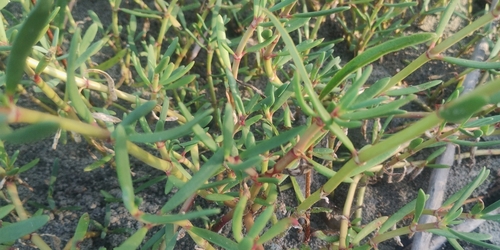
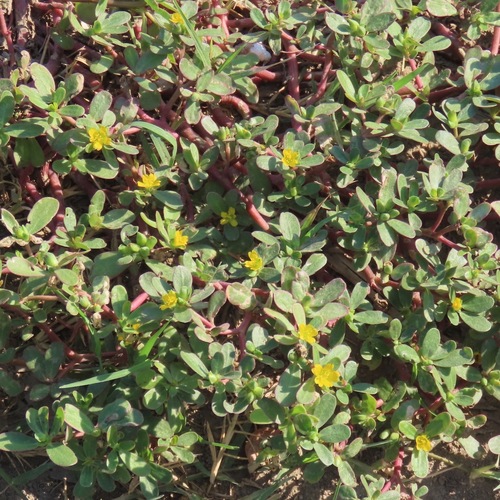
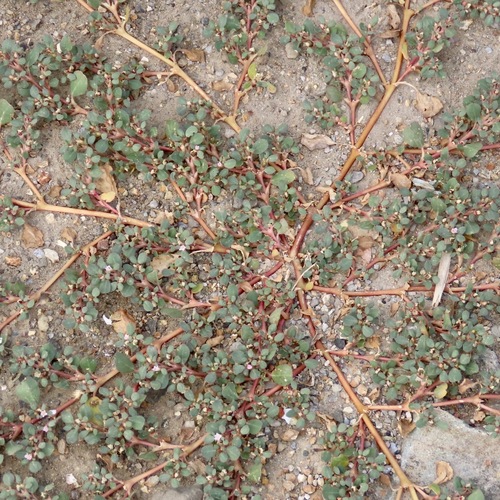
Prostrate spurge and other creeping spurges Euphorbia maculata

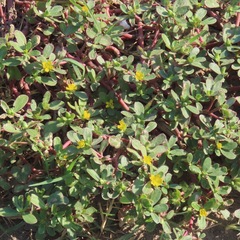
Break a stem: spurge oozes milky white sap, purslane has clear watery juice. Spurge flowers are whitish pink, purslane flowers yellow. Spurge causes vomiting and diarrhea and its sap irritates skin.
CAN BE CONFUSED WITH
Dangerous
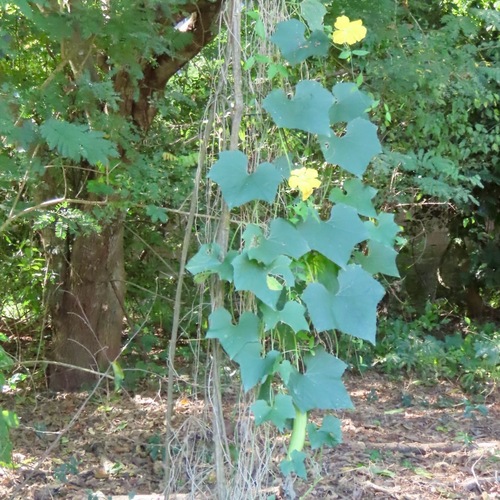
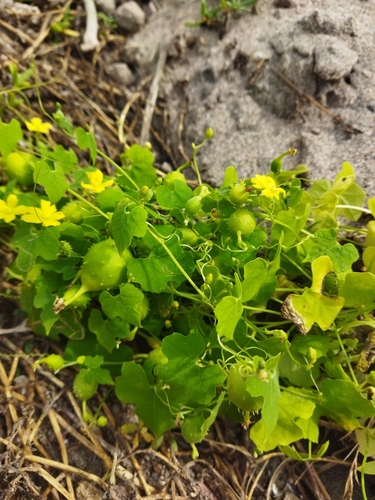
Sponge cucumber Luffa operculata

Luffa operculata is also called 'calabaza estropajo' on this coast. About 1 g of its extract may be lethal to an adult. No sourced field test to tell the two apart was found; eat only a sponge gourd you grew or bought as food.
Poisonous
Desert horse purslane Trianthema portulacastrum

Horse purslane looks like verdolaga and grows in the same places. Purdue's famine-food database reports it as toxic, causing diarrhea and paralysis. CONABIO's test: verdolaga flowers are yellow; horse purslane flowers are whitish, pink or purple, never yellow, and its paired leaves are unequal with a notched tip. See warnings → Source
Poisonous
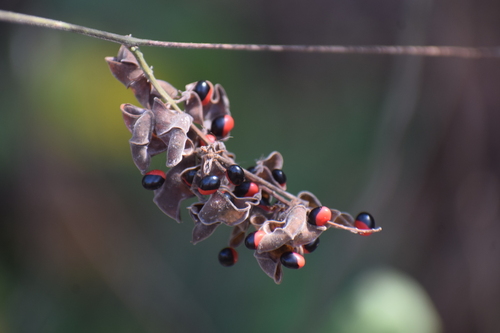
Rosary snoutbean Rhynchosia precatoria

Ojo de pajarito has red-and-black seeds like rosary pea (Abrus precatorius), and one rosary pea seed can kill. CONABIO says poisonings blamed on ojo de pajarito come from confusing the two. No safe field test is known: do not eat red-and-black seeds. See warnings →
Poisonous
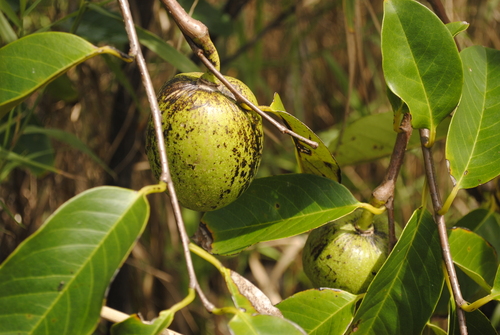
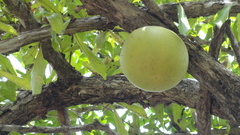
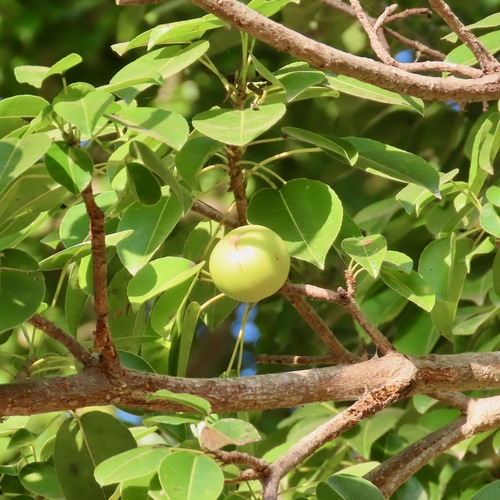
Manchineel Hippomane mancinella

Manchineel's fruit looks like a small green apple and often lies on the sand. Eating any part of the tree can be deadly. Its milky sap blisters skin and eyes, even from rain dripping off the leaves. Its local names manzanillo and manzanilla sound like food names; never take a fruit by its name alone. See warnings →
Poisonous
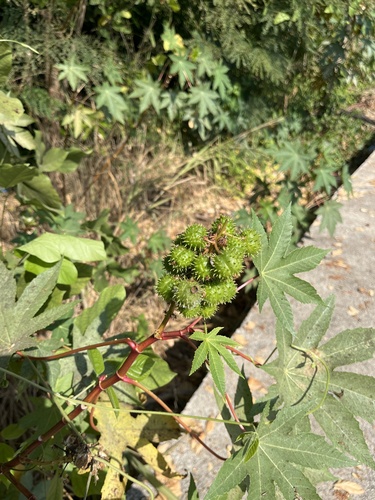
Castor bean Ricinus communis

Castor bean seeds are mottled and look like beans or nuts. A single seed can kill a child. See warnings →
Poisonous
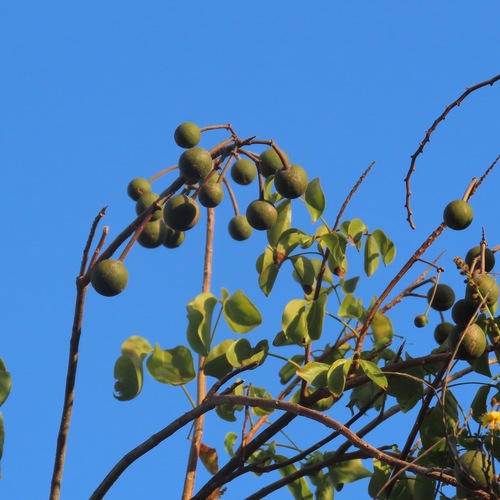
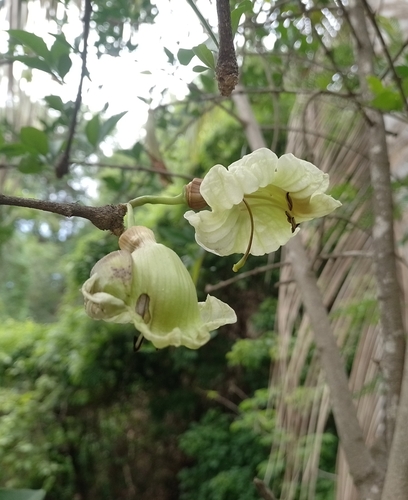
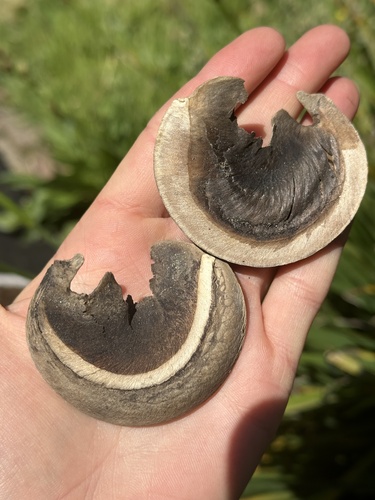
Hura polyandra Hura polyandra

Haba de San Ignacio has bean-like seeds. Eating the fruit or the sap can kill. See warnings →
Poisonous
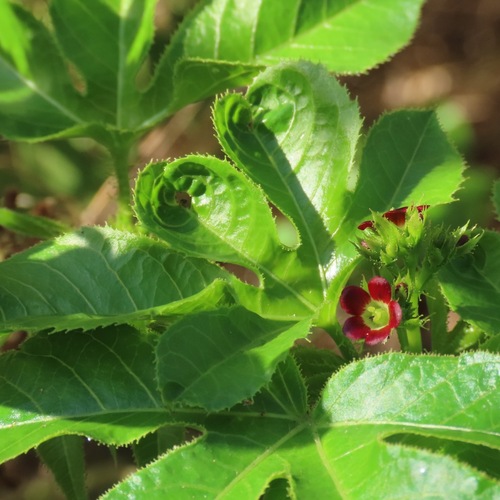
Bellyache Bush Jatropha gossypiifolia

Piñón negro and the other Jatropha here have seeds that look like edible nuts. All parts of the plant are poisonous. See warnings →
Poisonous
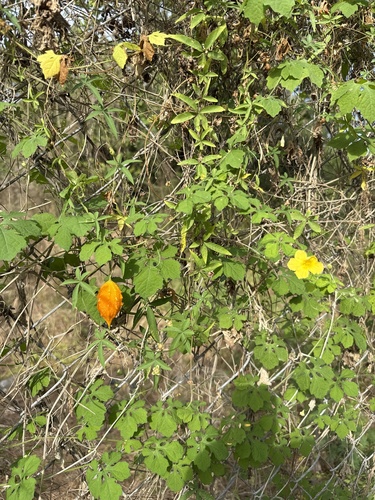
Bitter Melon Momordica charantia

Wild bitter melon (cundeamor) is not the cultivated vegetable. CONABIO says the wild form contains toxic substances and should not be eaten, and it can push blood sugar dangerously low in people taking diabetes medicine. See warnings → Source
50 species

Fruit

+45
Open
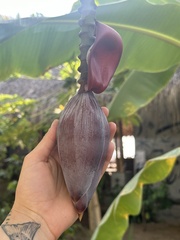
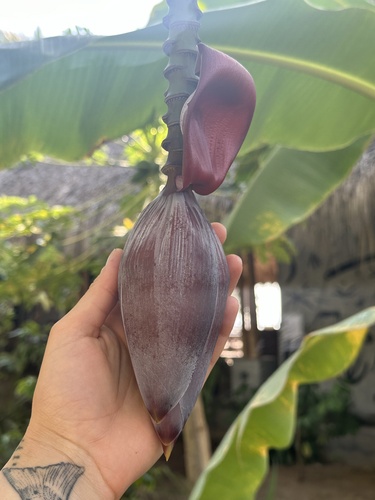
Banana
Photo: symbiiotica · CC-BY-NC

Banana

Musa spp · plátano, plátano macho, plátano manzano, plátano dominico
Cultivated
  • Fruit: Plantain (plátano macho) used unripe, ripe and very ripe; eaten raw, fried or cooked
Months in fruit (iNaturalist records in Mexico)
Sources (1)
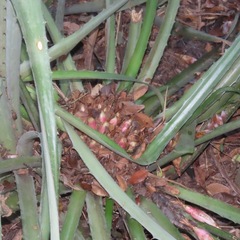
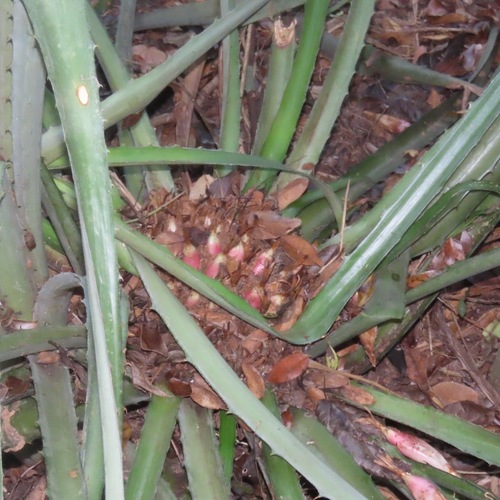
Bromelia karatas
Photo: zihuadean · CC-BY-NC

Aguama

Bromelia karatas · aguava, bichicol, timbiriche
The fruit has thin stinging hairs that must be removed; like pineapple, eating too much may blister the mouth.
Leaves have hooked spines.
Thick leaves with sharp teeth along the edges.
  • Fruit: Sour fruit eaten with or without the skin; in Sinaloa simmered with piloncillo and cinnamon, also made into a drink (agua).
  • Flowers: Very young inflorescences and tender leaf bases of young shoots eaten as a vegetable.
Months in fruit (iNaturalist records in Mexico)
Sources (2)
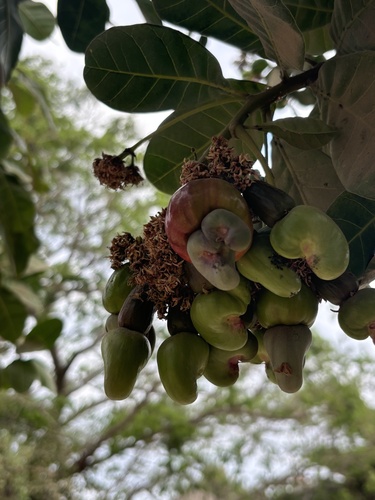
Cashew
Photo: alexmunday · CC-BY-NC

Cashew

Cultivated
The shell around the nut holds a caustic oil that blisters skin; the papery coat on the seed also causes a blistering rash. Never bite or crack a raw nut; it must be roasted first.
The raw nut shell oil (cardol) is caustic and blisters the skin; if it touches the mouth it can poison. The seed must be roasted to destroy the juice. The plant contains substances that cause allergies.
  • Fruit: The fleshy false fruit (swollen stalk, cashew apple) is eaten raw or in sweets
  • Seeds: The nut is eaten only after roasting, with salt
  • Leaves: Young leaves eaten as a vegetable
Season: In Central America fruit ripens December to July
Sources (1)
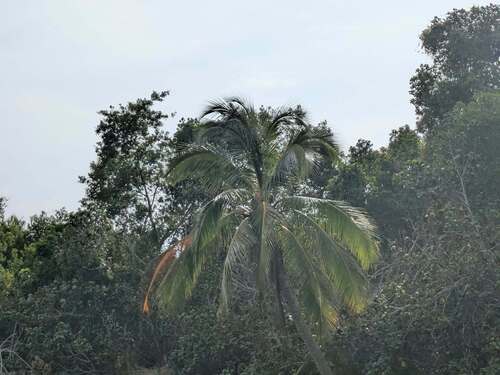
Coconut Palm
Photo: viridelao · CC-BY-NC

Coconut Palm

Cocos nucifera · cocotero, coco, palma de coco
Cultivated
Ripe coconut water can be irritating, and fruit juice sensitized the skin of guinea pigs and adults in tests.
  • Fruit: Water of young (green) coconuts drunk as a refreshing drink; fresh meat of mature nuts eaten raw or used after the water is removed; dried meat (copra) pressed for oil
Months in fruit (iNaturalist records in Mexico)
Sources (1)
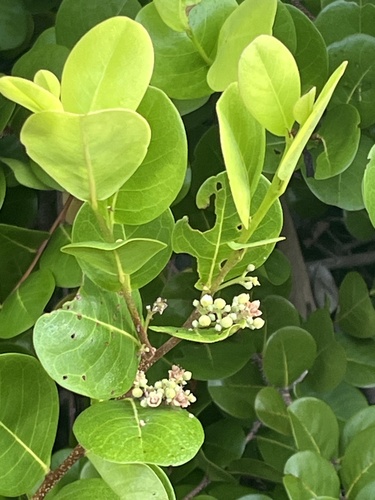
Cocoplum
Photo: alisonbabb · CC-BY-NC

Cocoplum

Chrysobalanus icaco · icaco, ciruela de coco, ciruela de paloma
Repeated doses of leaf extract for 28 days raised liver enzymes and changed liver tissue in rats; the authors advise care with prolonged use.
Roasted ground seeds are used to make people vomit; the seed preparation is an emetic.
  • Fruit: Fruit eaten fresh or candied with sugar; in Mexico eaten fresh regionally when white (pink or purple ones taste bland).
  • Seeds: Kernel inside the stone is edible, often roasted.
Months in fruit (iNaturalist records in Mexico)
Sources (2)
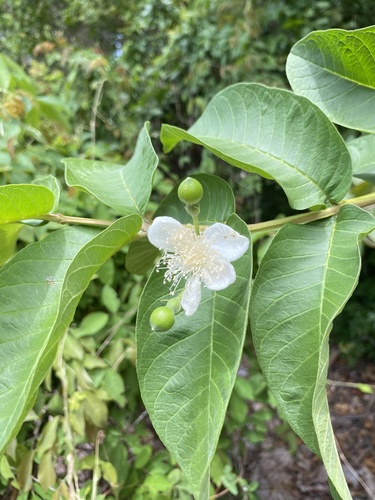
Common guava
Photo: gabrielitha_garcia · CC-BY-NC

Common guava

Psidium guajava · guayaba, guayabo
  • Fruit: Ripe fruit eaten fresh; also made into preserves, jellies, jams, juices and drinks
  • Fruit: In Mexico much of the crop goes into guava paste (ate), guavas in syrup and liqueurs
Season: Fruit ripens 90 to 150 days after flowering (flowers March to September)
Months in fruit (iNaturalist records in Mexico)
Sources (3)
Crateva tapia
Photo: zihuadean · CC-BY-NC

Perihuete

Roots are acrid; their juice is said to blister skin. Eat only the ripe fruit pulp.
Avoid in pregnancy: a leaf extract strongly stimulated the uterus in a laboratory test.
  • Fruit: Gritty sweet pulp of the ripe yellow fruit eaten raw. Fallen fruit smells bad as it rots, which leads some to think it inedible.
Months in fruit (iNaturalist records in Mexico)
Sources (2)
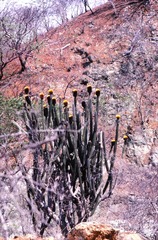
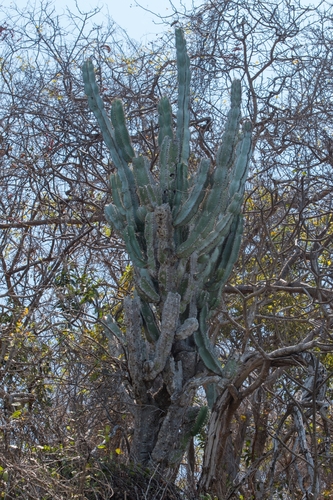
Hairbrush Cactus
Photo: vicente47506 · CC-BY-NC

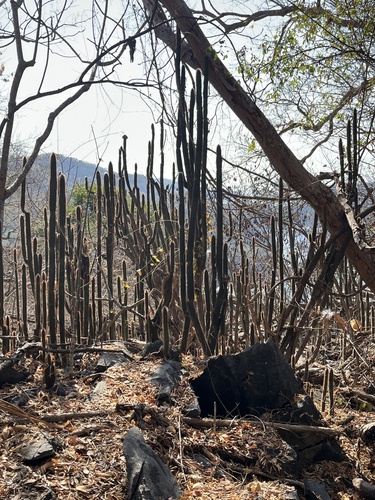
Hairbrush Cactus

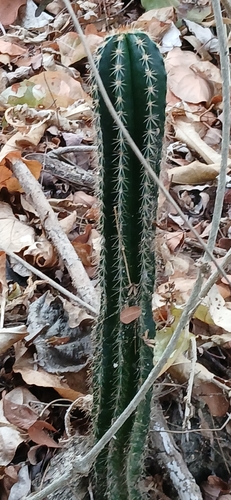
Pachycereus pecten-aboriginum · cardón, órgano, cardón hecho, pitayo cimarrón
Fruits are covered in abundant spines. A sacred narcotic drink is reported from the young branches; do not drink preparations of the branches.
  • Fruit: Red pulp and inner rind cooked into a jam (miel de hecho).
  • Seeds: Seeds boiled free of pulp, ground into meal and mixed with corn for tortillas, or boiled into an oily paste.
Months in fruit (iNaturalist records in Mexico)
Sources (2)
Jacaratia mexicana
Photo: vicente47506 · CC-BY-NC

Bonete

Jacaratia mexicana · papaya orejona, cuaguayote, coalsuayote
  • Fruit: Fruit eaten cooked, in salad, as a sweet or as juice; Nahua communities of central Guerrero pick it green and let it ripen. Tender fruit eaten sliced with salt, lime and chile, added to broths, or roasted.
  • Seeds: Seeds eaten toasted with salt like pepitas.
  • Other: In Colima a starch from the trunk is made into a kind of tortilla.
Season: Ripens just before spring.
Months in fruit (iNaturalist records in Mexico)
Sources (2)
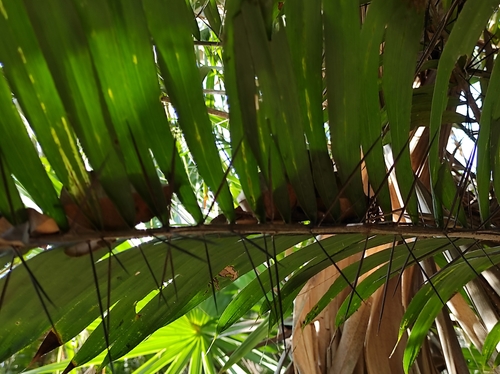
Macaw palm
Photo: cesaryaelmurillo · CC-BY-NC

Macaw palm

Acrocomia aculeata · coyul, cocoyol, coyol, guacoyul
The trunk, leaf stalks and young spathe are covered in long spines.
Trunk, leaves and flower clusters carry sharp black spines.
  • Fruit: Pulp eaten fresh or, more often, peeled and cooked in water with piloncillo and cinnamon into a syrup (coyul enmielado)
  • Seeds: After the pulp is eaten, the hard shell is cracked with a stone or hammer to eat the kernel (coquito)
  • Sap: In Chiapas an alcoholic drink called taberna is made from the stems
Season: Fruits May to October (Veracruz guide)
Months in fruit (iNaturalist records in Mexico)
Sources (2)
Madras Thorn
Photo: guadalupe_maganda_silva · CC-BY-NC

Madras Thorn

Pithecellobium dulce · guamúchil, huamúchil, cuamuchil, guamúche
Fresh fruit eaten in large amounts can "close" the throat because of its tannins.
Spiny branches. Do not put sap or plant liquids in the eyes: no safety study for that use was found.
  • Seeds: The sweet-sour fleshy aril around the seed is eaten fresh; it is also made into a lemonade-like cool drink. The seeds themselves are listed as edible.
  • Fruit: Sweet-sour fruit eaten fresh, with salt, chili and lime, or in atole; a bitter type (atorón, ahogadizo) is ground into salsa
Season: Fruits ripen March to July (sometimes August)
Months in fruit (iNaturalist records in Mexico)
Sources (2)
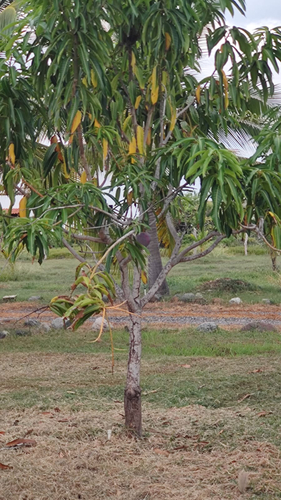
Mango
Photo: viridelao · CC-BY-NC

Mango

Cultivated
The peel and sap carry the same kind of allergen as poison ivy (urushiol). People who react to poison ivy can get a rash from handling mango peel; the flesh itself carries little of it, so have someone else peel the fruit.
Sap and leaves can cause skin rash: a leaf extract caused dermatitis in 25 of 207 people patch-tested.
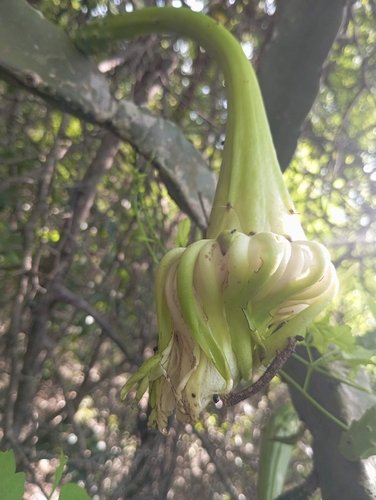
  • Fruit: Ripe fruit eaten fresh; Guerrero coast varieties include Ataulfo, Manila and Criollo
Months in fruit (iNaturalist records in Mexico)
Sources (2)
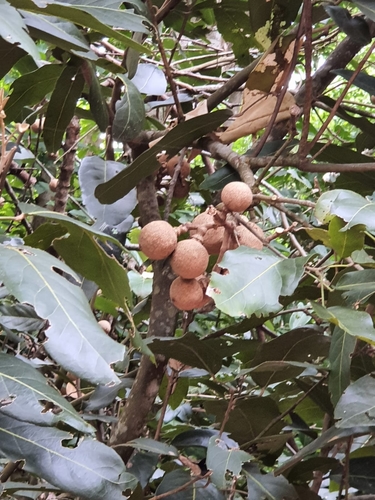
Mexican Plum
Photo: vicente47506 · CC-BY-NC

Mexican Plum

Spondias purpurea · ciruela mexicana, ciruela, jocote, ciruela de monte
  • Fruit: Ripe fruit eaten fresh, dried, or pickled in alcohol or brine; made into cool drinks, vinegar, jelly and jam; unripe fruit added to beans and made into atole and salsa
  • Leaves: Young shoots and leaves eaten raw or cooked as a vegetable
Season: Fruit ripens March to May
Months in fruit (iNaturalist records in Mexico)
Sources (1)
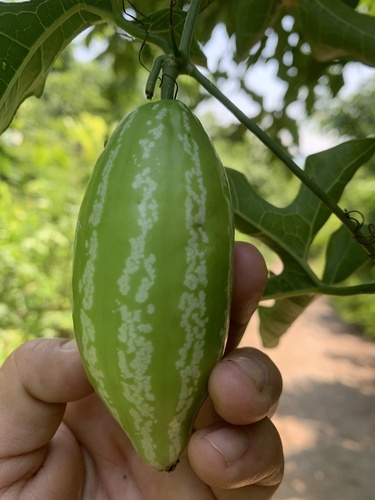
Mexican Sour Gherkin
Photo: karlos_osorio · CC-BY-NC

Mexican Sour Gherkin

Melothria scabra · sandía de ratón, sandiita, cucamelón, pepinillo agrio mexicano
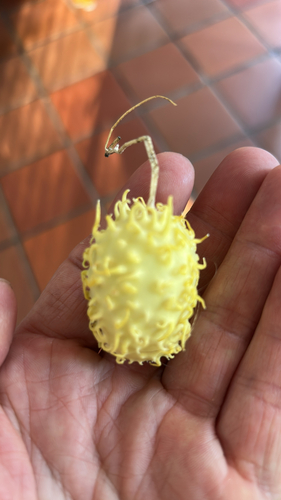
Several small wild cucurbits grow here (for example Cayaponia, Ibervillea, Schizocarpum). Do not eat any small wild gourd you cannot identify, or any that tastes bitter.
  • Fruit: Fruit eaten as a snack or in salads
Sources (2)
Nance
Photo: neftali8994 · CC-BY-NC

Nance

Byrsonima crassifolia · nanche, nanchi, nance agrio, changunga
  • Fruit: Fresh fruit eaten raw; also made into cool drinks, liqueurs, jellies, sweets, ices and preserves
Season: Fruits ripen July to October, mainly August and September
Months in fruit (iNaturalist records in Mexico)
Sources (1)
Noni
Photo: viridelao · CC-BY-NC

Noni

Includes survival-food usesCultivated
Cases of acute hepatitis have been reported after drinking noni juice; EFSA's 2006 panel found no convincing evidence that the juice caused them. Treat it with caution if you have liver disease.
Several cases of liver toxicity have been reported in people who drank noni juice or tea for several weeks; it is unclear whether noni caused them.
High in potassium: people with kidney disease or on potassium-raising, blood-pressure or liver-harming medicines should ask a health care provider first.
Little is known about safety in pregnancy or breastfeeding.
  • Fruit: Raw or cooked fruit recorded in the diet of Polynesian and Australian Aboriginal peoples, by some accounts only in famine because of its unpleasant taste and smell; today sold mainly as juice
Months in fruit (iNaturalist records in Mexico)
Sources (2)
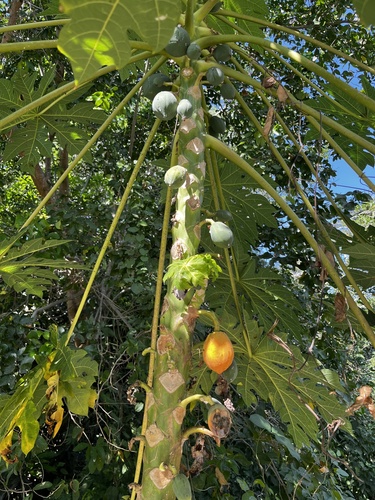
Papaya
Photo: louisthe1st · CC-BY-NC

Papaya

Cultivated
Older leaves contain the alkaloid carpaine; eat only very young leaves, cooked.
A seed extract was toxic to embryos in pregnant rats; avoid papaya seeds during pregnancy.
The latex (milky sap of green fruit and stems) irritates and can blister skin, and swallowing it can cause severe gastritis.
Avoid papaya seed preparations in pregnancy: a seed extract harmed embryos in pregnant rats.
May increase the effect of warfarin (blood thinner) and the risk of bruising and bleeding.
People allergic to latex are often also allergic to papaya.
Unprocessed papain may harm the fetus; avoid medicinal amounts in pregnancy.
  • Fruit: Ripe fruit eaten fresh at breakfast, in licuados or as a sweet; green fruit, once 'bled' of its latex and with the seeds removed, can be grated raw like a carrot.
  • Seeds: Peppery seeds used as a spice.
  • Flowers: Male flowers cooked as a green vegetable; very young leaves cooked, with a strong bitter flavor.
Months in fruit (iNaturalist records in Mexico)
Sources (3)
Paradise Tree
Photo: luishernandez_brd · CC-BY-NC

Paradise Tree

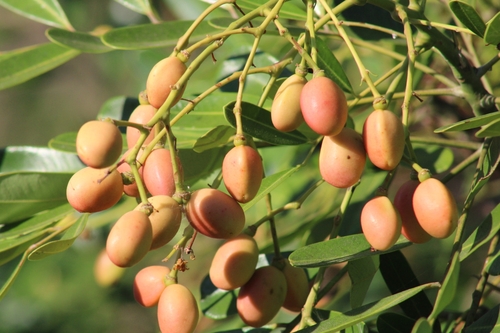
Simarouba amara · aceituno, negrito, pasaque, zapatero
The seed kernel yields an edible oil but contains a toxic crystalline glycoside; do not eat the seeds.
  • Fruit: Fresh olive-like fruits are edible, sweet but somewhat astringent, not highly valued
  • Fruit: Fresh fruits are edible with a pleasant taste (Veracruz guide)
Season: Fruits ripen April to May (July)
Months in fruit (iNaturalist records in Mexico)
Sources (3)
Pond Apple
Photo: betootero · CC-BY-NC

Pond Apple

Annona glabra · anona, anona de agua
Seeds of the related sugar apple (Annona squamosa) are recorded as emetic, insecticidal and eye-irritating; do not eat or crush the seeds of this species either.
  • Fruit: Fruit is eaten; it is listed among the anonas eaten in Mexico
Months in fruit (iNaturalist records in Mexico)
Sources (2)
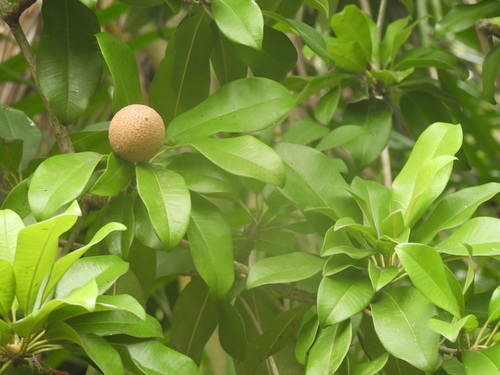
Sapodilla
Photo: tyler_hoar · CC-BY-NC-ND

Sapodilla

Manilkara zapota · chicozapote, zapote chico
Seeds are emetic and the seeds and leaves contain enough hydrocyanic acid to be toxic. Do not eat the seeds; the unripe fruit is astringent.
Seeds have been described as emetic, causing severe pains; do not eat the seeds.
Reported to raise blisters (the source does not say which part of the plant).
  • Fruit: Ripe fruit eaten fresh; also made into jams and syrups, sometimes ice (nieve) or sweets
  • Fruit: Mostly eaten fresh, as a dessert in itself
Season: Fruit ripens December (January) to March (April)
Months in fruit (iNaturalist records in Mexico)
Sources (4)
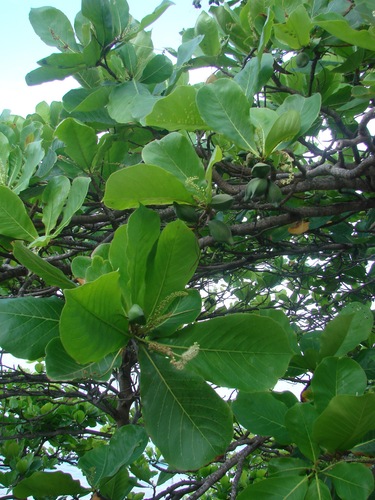
Sea Almond
Photo: carlos2 · CC-BY-NC

Sea Almond

Terminalia catappa · almendro de playa, almendra
Cultivated
A leaf extract given by mouth killed 20% of rats at a single high dose (2,000 mg/kg) and 30% at 1,500 mg/kg in repeated dosing; no deaths at 500 mg/kg.
  • Fruit: The fruit is eaten fresh and used in sweets.
  • Seeds: Almond-flavored kernel eaten raw or roasted. In Mexico the kernel is described as bitter and not used as a nut.
Months in fruit (iNaturalist records in Mexico)
Sources (2)
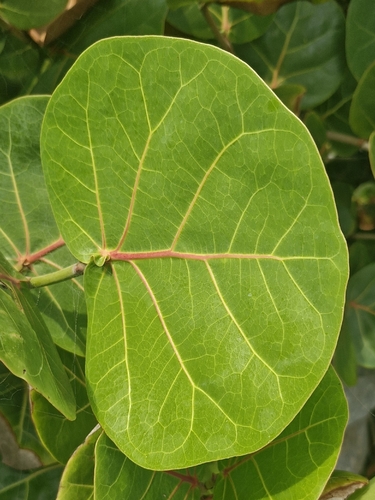
Sea Grape
Photo: deneb16 · CC-BY-NC

Sea Grape

Coccoloba uvifera · uva de mar, uva de playa, uvero
  • Fruit: Ripe grape-like fruit made into jam, jelly and a wine-like drink
  • Fruit: Ripe fruit is sour; used for jellies, ice cream, jams, soft drinks and a wine-like drink
Season: Fruits July to September (CONABIO)
Months in fruit (iNaturalist records in Mexico)
Sources (3)
Sponge Gourd
Photo: zihuadean · CC-BY-NC

Sponge Gourd

Luffa aegyptiaca · estropajo, esponja vegetal, paste
Do not eat any cucurbit fruit that tastes noticeably bitter (cucurbitacins).
The fruits contain a toxic bitter principle; an extract of the aerial parts was toxic to mice by injection (LD50 31.6 mg/kg). Do not eat bitter fruits.
  • Fruit: Young (immature) fruits cooked or eaten like cucumber or zucchini; older fruits turn fibrous and bitter
  • Leaves: Young shoots, leaves and flower buds cooked
Don’t confuse with: Sponge cucumber Luffa operculata. Luffa operculata is also called 'calabaza estropajo' on this coast. About 1 g of its extract may be lethal to an adult. No sourced field test to tell the two apart was found; eat only a sponge gourd you grew or bought as food.
Months in fruit (iNaturalist records in Mexico)
Sources (4)
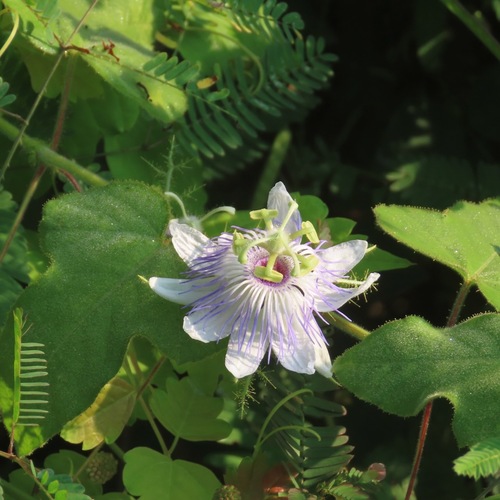
Stinking Passionflower
Photo: zihuadean · CC-BY-NC

Stinking Passionflower

Passiflora foetida · granadilla de culebra, flor de granadita, clavellín blanco
All parts except the ripe fruit contain cyanogenic glycosides, enough to have killed goats and other animals. Eat only fully ripe fruit; never the leaves or unripe fruit.
  • Fruit: Fruit is edible (UNAM eFloraMEX lists 'fruto comestible')
  • Fruit: Only the ripe fruit: the whitish, fragrant pulp around the seeds is eaten raw or used to flavor drinks
Season: Fruits February to December
Months in fruit (iNaturalist records in Mexico)
Sources (5)
Stinkingtoe
Photo: alex_nava_hernandez · CC-BY-NC

Stinkingtoe

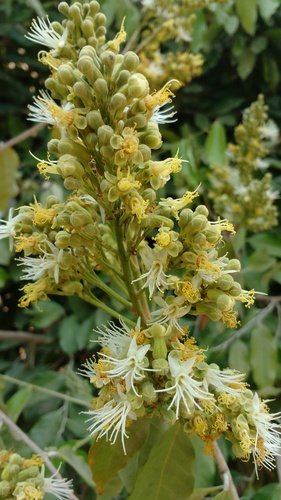
Hymenaea courbaril · guapinol, cuapinol, cuapinole
  • Fruit: The sweet, floury pulp around the seeds is eaten raw, toasted like pinole or as atole, and used to flavor atole and chocolate; also used in drinks
Season: Pods stay on the tree 7 to 10 months
Months in fruit (iNaturalist records in Mexico)
Sources (2)
Vitex mollis
Photo: daniel_brito · CC-BY-NC

Coyotomate

Vitex mollis · cuyomate, cuyotomate, nanche de perro, capulincillo
  • Fruit: Ripe fruit eaten raw, fresh or mashed with sugar; gathered from the wild and sold in local markets in Mexico
  • Leaves: Leaf infusion drunk as a stimulating tea, tasting like black tea
Months in fruit (iNaturalist records in Mexico)
Sources (2)
West Indian Elm
Photo: motmot11 · CC-BY-NC

West Indian Elm

Guazuma ulmifolia · guácima, guácimo, cuaulote, cuahulote
Bark extract stimulated the uterus of rats; the Atlas found no toxicity information. Avoid in pregnancy.
  • Fruit: The green mucilaginous fruit is sweet and eaten raw, ground or dried (children eat it as a treat); ripe fruit and seeds are made into tortillas, atole and pinole; a drink is made by crushing the fruit in water
  • Flowers: Flower listed as edible
Season: Fruits ripen almost all year, especially September to April
Months in fruit (iNaturalist records in Mexico)
Sources (1)
White manjack
Photo: viridelao · CC-BY-NC

White manjack

Cordia dentata · uvito, gulaber, baboso, palo noble
  • Fruit: Fruit eaten raw; the clear pulp is very sweet and sticky. On the Isthmus of Tehuantepec about 10% of people interviewed eat the fruit.
Months in fruit (iNaturalist records in Mexico)
Sources (2)
Wild Fig
Photo: jareth_sanguino · CC-BY-NC

Wild Fig

The raw latex is dangerous to swallow. Overdoses cause poisoning with brain swelling; poisonings in children and at least one death have been recorded, even at amounts close to those used in treatment.
The latex and dried latex dust irritate the eyes and skin.
  • Fruit: Ripe fruit is soft and juicy but of mediocre flavor; eaten more by birds and mammals than people
Months in fruit (iNaturalist records in Mexico)
Sources (1)
18 species

Greens and quelites

+13
Open
Bitter Melon
Photo: jwagner1960 · CC-BY-NC

Bitter Melon

Momordica charantia · balsamina, bálsamo, cundeamor, melón amargo
CONABIO: the wild form growing here contains toxic substances and should not be eaten. It can strengthen diabetes drugs and cause fatal low blood sugar; it has potentially abortive substances.
Mature fruits of wild plants are said to be poisonous.
Lowers blood sugar and can add to the effect of diabetes medicines, risking dangerous hypoglycemia; do not combine with insulin or diabetes drugs without medical supervision.
Reported adverse effects include hypoglycemic coma and convulsions in children.
Avoid in pregnancy: animal studies show abortion, uterine bleeding and birth defects.
The seeds (inside the bright red pulp of the ripe orange fruit) contain vicine, which can cause a favism-like illness with headache, fever, abdominal pain and coma; the wild form should not be eaten.
  • Leaves: Leaves eaten as a vegetable (cultivated form only; see warning)
Months in fruit (iNaturalist records in Mexico)
Sources (2)
Cochineal Nopal Cactus
Photo: ana_ozomahtli · CC-BY-NC

Cochineal Nopal Cactus

Opuntia cochenillifera · nopal de la cochinilla
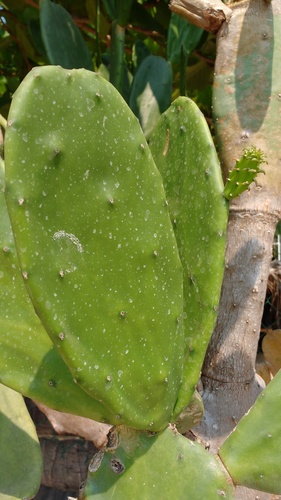
Tiny barbed glochids on pads and fruit lodge in skin and are hard to remove; handle with tongs or gloves and singe or scrape before eating.
Older pads can be high in oxalic acid; oxalate is a concern for people prone to kidney stones, gout or arthritis. Cooking lowers oxalate.
  • Fruit: Sweet red fruit eaten.
  • Leaves: Young pads boiled, peeled of skin and spines, then fried with onion and chile.
Months in fruit (iNaturalist records in Mexico)
Sources (1)
Common Purslane
Photo: zihuadean · CC-BY-NC

Common Purslane

Portulaca oleracea · verdolaga
Larousse recommends cooking it in water with tequesquite or baking soda to avoid possible stomach upsets.
Look-alike: low spurges (Euphorbia) grow in the same places and have milky, poisonous sap that irritates eyes and skin. Purslane has clear, watery sap.
  • Leaves: Cooked as a vegetable, mainly in stews and broths, e.g. verdolagas with pork, or fried in lard with onion and serrano chile (Tuxtla)
  • Leaves: Edible (CONABIO weed sheet)
Season: Quelites are eaten mostly in the rainy season
Don’t confuse with: Prostrate spurge and other creeping spurges Euphorbia maculata. Break a stem: spurge oozes milky white sap, purslane has clear watery juice. Spurge flowers are whitish pink, purslane flowers yellow. Spurge causes vomiting and diarrhea and its sap irritates skin.
Months in fruit (iNaturalist records in Mexico)
Sources (5)
Decumbent Prickly Pear
Photo: luis-eduardo · CC-BY-NC

Decumbent Prickly Pear

Opuntia decumbens · arpón, nopal de culebra, nopal rastrero
Tiny barbed glochids on pads and fruit lodge in skin and are hard to remove; handle with tongs or gloves and singe or scrape before eating.
Older pads can be high in oxalic acid; oxalate is a concern for people prone to kidney stones, gout or arthritis. Cooking lowers oxalate.
  • Leaves: Pads eaten raw or cooked.
Months in fruit (iNaturalist records in Mexico)
Sources (1)
Fence Post Tree
Photo: antonio_perez2 · CC-BY-NC

Fence Post Tree

Gliricidia sepium · cacahuananche, cocuite, mata ratón
CONABIO itself warns that eating the flowers is risky because they contain toxic substances. Seeds, leaves, bark and root are toxic and are used to poison rodents: never eat them.
Leaves, bark, seeds and roots are used as a rat poison after fermentation; non-ruminant animals have shown poisoning. Do not eat.
The Atlas records the leaf juice, mixed with other plants, used as a permanent human sterilizing agent.
  • Flowers: Flowers traditionally eaten boiled, fried (in batter) or pickled; CONABIO advises against eating them
Months in fruit (iNaturalist records in Mexico)
Sources (2)
Hummingbird Nopal
Photo: gilbertoramirez · CC-BY-NC

Hummingbird Nopal

Opuntia karwinskiana · nopal lengua de vaca
Tiny barbed glochids on pads and fruit lodge in skin and are hard to remove; handle with tongs or gloves and singe or scrape before eating.
Older pads can be high in oxalic acid; oxalate is a concern for people prone to kidney stones, gout or arthritis. Cooking lowers oxalate.
  • Leaves: The pads of almost all Opuntia are edible; tender young pads are eaten raw or cooked as nopales.
Months in fruit (iNaturalist records in Mexico)
Sources (1)
Moringa tree
Photo: taniaortega · CC-BY-NC

Moringa tree

Moringa oleifera · moringa
Cultivated
Do not eat the root or root bark. Older sources mention the root as a horseradish substitute, but the root and bark contain toxic alkaloids (spirochin) and benzylisothiocyanate; the leaf is the safest edible part.
A macerate of fresh leaves irritates the skin and can even raise blisters.
Roots contain alkaloids and spirochin and are considered toxic; root and stem-bark extracts caused fetal loss in pregnant rats. Avoid root and bark, especially in pregnancy.
  • Leaves: Leaves eaten as a vegetable, fresh or dried
  • Pods: Young pods eaten, in soup or cooked like asparagus
  • Seeds: Ripe seeds roasted and eaten like nuts; seed oil is edible
Months in fruit (iNaturalist records in Mexico)
Sources (4)
Philippine spinach
Photo: yolirolly · CC-BY-NC

Philippine spinach

Talinum fruticosum · hoja de agua, verdolaga camba, espinaca de Filipinas, quelite
High in oxalate; people with kidney problems, gout or rheumatoid arthritis should avoid it. Cooking removes about half the soluble oxalate and destroys its hydrocyanic acid. Contains nitrates and nitrites that cooking does not remove: take care feeding it to babies.
Leaves are high in oxalic acid; people with kidney problems (kidney stones), gout or rheumatoid arthritis are advised to avoid or limit eating it. Cooking removes about half of the soluble oxalate. It also contains nitrates and nitrites, so care is advised when feeding it to babies.
  • Leaves: Widely grown in the tropics as a leaf vegetable; leaves and young stems harvested through the growing season
Sources (3)
13 species

Seeds and nuts

+8
Open
Attalea guacuyule
Photo: cesaryaelmurillo · CC-BY-NC

Corozo guacoyul

Attalea guacuyule · coquito de aceite, guacoyul, cocoyul, corozo
  • Seeds: The oily kernel (coquito) is edible and was collected in large amounts as raw material for the fat industry; the yellow pulp around it is also eaten and the kernel is used for oil, atole and other local foods
Sources (2)
Breadnut
Photo: baldemar · CC-BY-NC

Breadnut

Brosimum alicastrum · ramón, capomo, apomo, ojite
  • Fruit: Fruit pulp is edible
  • Seeds: Seeds are boiled or roasted (chestnut-like taste) and eaten alone or with maize, honey and plantain; roasted and ground as a coffee substitute; ground into a dark flour for bread or tortillas
Season: Fruits ripen (February) March to May (June)
Months in fruit (iNaturalist records in Mexico)
Sources (1)
Durban Crowfoot
Photo: zihuadean · CC-BY-NC

Durban Crowfoot

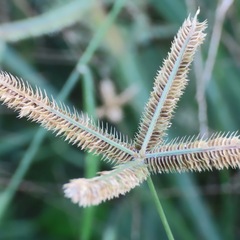
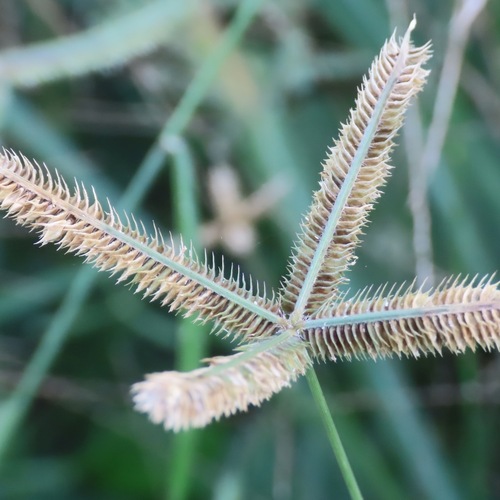
Dactyloctenium aegyptium · pasto pata de pollo
Includes survival-food uses
CONABIO notes the plant can at times contain toxic cyanogenic glycosides (as forage).
Forage grass that at some times of year can contain toxic cyanogenic glycosides (a livestock concern; no human case found).
  • Seeds: Grain collected, cleaned and ground into meal for porridge or flatbread; a minor cereal in traditional African contexts, mainly a survival or subsistence food
Months in fruit (iNaturalist records in Mexico)
Sources (2)
Guanacaste
Photo: naturazihua-24 · CC-BY-NC

Guanacaste

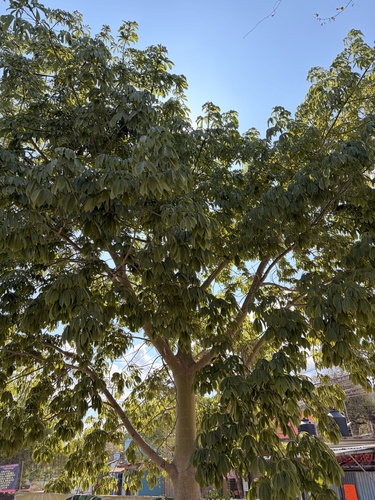
Enterolobium cyclocarpum · parota, huanacaxtle, cuanacaztle
Eat the seeds only cooked, toasted or steamed: raw seeds contain hydrocyanic acid, which cooking reduces or removes.
A methanol extract of the fruit pulp killed fish within 3 minutes; the seeds may contain a factor toxic to chickens.
  • Seeds: Seeds eaten toasted (as nourishing as beans), ground, or mixed with meats in chile salsas; also eaten boiled or steamed
Season: February to July (Huatulco, Oaxaca coast)
Months in fruit (iNaturalist records in Mexico)
Sources (3)
Kapok
Photo: guadalupe_maganda_silva · CC-BY-NC

Kapok

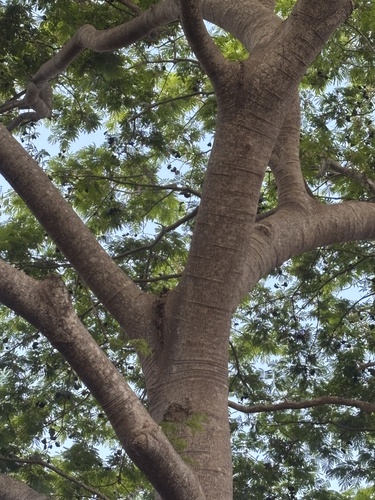
Ceiba pentandra · ceiba, ceibo, pochote, pochotillo
Eat the seed only cooked or roasted; leaves, flowers and young fruit only cooked.
Seeds and seed oil contain cyclopropenoid fatty acids that cause abnormal reactions in animals; one database advises against eating kapok seed or oil unless these are chemically removed. The CONABIO sheet lists cooked seed as edible, so sources disagree.
  • Seeds: Seed is edible cooked or roasted; seed oil (30-40%) is used industrially for margarine
  • Leaves: Young leaves, flowers and tender fruits are eaten cooked
Season: Fruits April to June
Months in fruit (iNaturalist records in Mexico)
Sources (2)
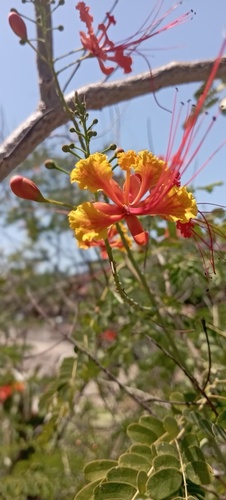
Peacock flower
Photo: angel_cruzz · CC-BY-NC

Peacock flower

Caesalpinia pulcherrima · clavellino, tabachín, flor de camarón
Cultivated
Eating the leaves or roots can cause severe gastroenteritis; a pod-and-seed extract was lethal to mice by injection. Mature seeds and pods are not food.
Eating the leaves or roots can cause severe gastroenteritis; extracts of pods and seeds killed all test mice at 500 mg/kg. The Atlas says its use should be avoided.
Leaf extract stimulated the uterus of pregnant cats; recorded as abortifacient. Avoid in pregnancy.
  • Seeds: Tender young seeds eaten raw or cooked, seed coat discarded; as sweet as a tender pea
Months in fruit (iNaturalist records in Mexico)
Sources (2)
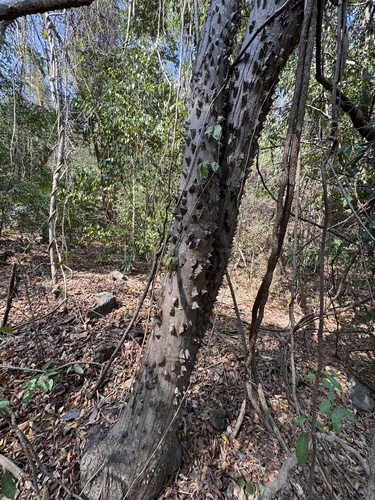
Pochote
Photo: alex_nava_hernandez · CC-BY-NC

Pochote

Ceiba aesculifolia · apochote, puchote
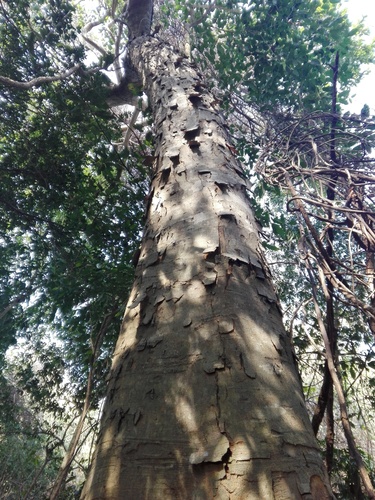
Straight trunk covered in thick spines.
  • Seeds: Seeds are eaten (roasted) and sold by communities in the Tehuacán Valley, Puebla
  • Leaves: Young leaves cooked; ripe fruits eaten stewed; young tender fruits sometimes cooked
Season: Fruits June to July (Guadalajara area)
Months in fruit (iNaturalist records in Mexico)
Sources (3)
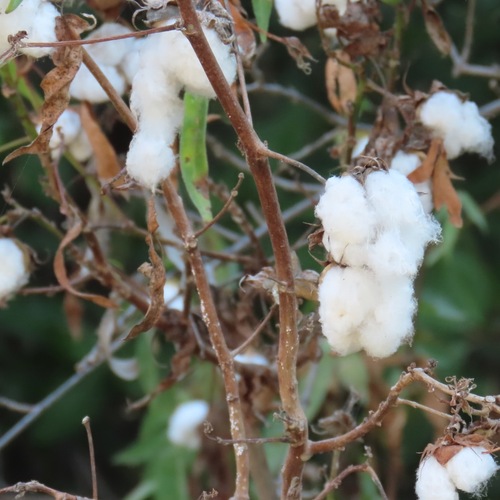
Upland Cotton
Photo: zihuadean · CC-BY-NC

Upland Cotton

Gossypium hirsutum · algodón
Many forms produce seeds containing the toxin gossypol, which must be removed before eating; only glandless cultivars are free of it. Wild or local cotton seed should not be eaten.
The seeds contain gossypol, a toxic compound; seed in the diet caused weight loss, vomiting, breathing difficulty, anemia and weakness in lab animals.
In men, gossypol stops sperm production; in trials more than 20% did not recover fertility.
Root, flower and whole-plant extracts stimulate the uterus; avoid in pregnancy.
Plant hairs and pigment glands can cause allergic reactions in people.
  • Seeds: Seeds eaten cooked (roasted as a snack, boiled, or ground into flour); seed oil used for cooking
Months in fruit (iNaturalist records in Mexico)
Sources (1)
White leadtree
Photo: guadalupe_maganda_silva · CC-BY-NC

White leadtree

Leucaena leucocephala · guaje, guaje blanco, huaje, guaje verde
Leaves and seeds contain mimosine, a toxic amino acid; CONABIO says it can be toxic when large amounts are eaten. In non-ruminant animals it causes weakness, weight loss, abortion and hair loss. One lab review states no toxicity from human consumption has been reported.
Eating the plant was toxic to pigs (hair loss, reproductive problems); the Atlas warns that internal use carries toxicity risks.
Contains mimosine, which can be toxic if large amounts are eaten.
  • Seeds: Fresh green seeds from the pods are sold across Mexico and eaten raw or cooked as a condiment
  • Leaves: Tender leaves eaten as a quelite
  • Seeds: Mature seeds used as a coffee substitute
Season: Fruits most of the year; pods ripen March to April
Months in fruit (iNaturalist records in Mexico)
Sources (3)
6 species

Roots and tubers

+1
Open
Jicama
Photo: daniel_brito · CC-BY-NC

Jicama

Cultivated
Only the root is food. The seeds contain rotenone and other toxins: seed powder fed to dogs caused breathing and heart problems, vomiting and death. Mature seeds, flowers and pods are high in rotenone. Do not eat seeds or mature pods.
Rotenone, mostly in the seed, is toxic to people and domestic animals at high concentrations.
The seeds are toxic: seed powder given to dogs caused breathing and heart problems and eventually death, plus severe vomiting. Only the root is food.
Contains rotenone, mainly in the seed, which can be toxic to people and domestic animals at high concentrations.
  • Root: The tuberous root is the food part; eaten raw or cooked
Sources (5)
9 species

Drinks and teas

+4
Open
Calabash Tree
Photo: ana_ozomahtli · CC-BY-NC

Calabash Tree

Crescentia cujete · tecomate
Only the seeds are recorded as food. The pulp of the closely related Crescentia alata is recorded as poisonous to livestock and birds; do not eat the pulp of this species either.
Eating the fruit pulp can cause severe diarrhea; in rats the pulp induced leukemia-lymphoma tumors; it causes abortion in cattle. Traditionally said to provoke abortion.
  • Seeds: Seeds used to make cool drinks
Season: Most of the year
Months in fruit (iNaturalist records in Mexico)
Sources (2)
Jicaro Tree
Photo: yolirolly · CC-BY-NC

Jicaro Tree

Crescentia alata · jícaro
Only the seeds are used as food. The fruit pulp is recorded as poisonous to livestock and birds; do not eat the pulp.
The fruit pulp is poisonous to cattle and birds.
One Atlas remedy for pregnancy bleeding mixes the fruit with tlacopatli (Aristolochia argentea), a plant genus that contains aristolochic acid (kidney failure, cancer).
  • Seeds: Sun-dried, ground seeds made into sweet cool drinks (agua fresca, horchata), or eaten cooked
Season: Flowering and fruiting all year (Veracruz guide)
Months in fruit (iNaturalist records in Mexico)
Sources (2)
Tamarind
Photo: isa_moguel · CC-BY-NC

Tamarind

Tamarindus indica · tamarindo
Cultivated
Seeds are eaten only after roasting, soaking and boiling to remove the seed coat; not eaten raw.
Fruit powder caused a slight allergic reaction on human skin in a patch test.
  • Pods: The sour pulp of the ripe pod is made into agua fresca, and industrially into concentrates, sweets and ice cream
  • Leaves: Young leaves, unripe pods and flowers are eaten as a vegetable in salads (sour, no vinegar needed)
  • Seeds: Seeds are eaten after roasting, soaking and boiling to remove the seed coat
Season: Fruits April to December
Months in fruit (iNaturalist records in Mexico)
Sources (1)
Wide Spikenard
Photo: yolirolly · CC-BY-NC

Wide Spikenard

Leaf extract blocked embryo implantation in 100% of treated rats; avoid in pregnancy or when trying to conceive.
Considered dangerous to domestic animals in some regions.
  • Seeds: Seeds soaked in water swell with a mucilage coat and are drunk as a cool drink like chia, sweetened or with fruit juice
Months in fruit (iNaturalist records in Mexico)
Sources (3)
2 species

Spices and flavorings

Open
Lipsticktree
Photo: uriostegui · CC-BY-NC

Lipsticktree

Bixa orellana · achiote
Listed by the Atlas among uses 'como abortiva' (to cause abortion); decoction stimulated rat uterus. Avoid medicinal use in pregnancy.
  • Seeds: Seeds used as a condiment and red food coloring, usually as achiote paste; important in southeastern Mexican cooking.
  • Seeds: Seeds steeped briefly in hot oil, which is strained and used to flavor and color dishes.
Season: Fruit is left to ripen and dry on the tree until brown and woody.
Months in fruit (iNaturalist records in Mexico)
Sources (2)
11 species

Other food uses

+6
Open
Beach Morning Glory
Photo: viridelao · CC-BY-NC

Beach Morning Glory

Ipomoea pes-caprae · riñonina, bejuco de playa, manto de la virgen playero, pata de vaca
Includes survival-food uses
Laxative in larger quantities; a famine food only.
An ethanol-water extract caused abortion in pregnant rats at 200 mg/kg; avoid during pregnancy.
The leaf and seed contain the indole alkaloid ergotamine.
  • Leaves: Leaves cooked as a vegetable: usually a famine food (laxative)
  • Root: Starchy roots cooked, eaten only in times of need (strongly laxative)
Months in fruit (iNaturalist records in Mexico)
Sources (2)
Cat's Claw
Photo: zihuadean · CC-BY-NC

Cat's Claw

Martynia annua · uña de gato, torito
Seed extract was toxic to mice (median lethal dose 100 mg/kg). Do not eat the seeds.
The hooked fruits catch on animals' legs and can injure cattle.
  • Pods: Immature fruits are edible
Months in fruit (iNaturalist records in Mexico)
Sources (1)
Frangipani
Photo: naturazihua-24 · CC-BY-NC

Frangipani

Plumeria rubra · cacaloxóchitl, flor de mayo
The milky caustic sap that flows from the trunk is poisonous; only the cooked flowers are recorded as food.
The caustic milky juice from the trunk is poisonous.
  • Flowers: Flowers eaten cooked with sugar
Months in fruit (iNaturalist records in Mexico)
Sources (1)
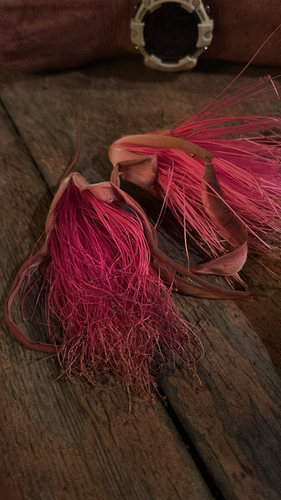
Mexican Marigold
Photo: zihuadean · CC-BY-NC

Mexican Marigold

Tagetes erecta · cempasúchil, flor de muerto, cempoal
Sap of flowers and roots can cause a sun-activated skin reaction (redness, burning, blisters) on broken skin; the scent can irritate nose and eyes.
Used traditionally to cause abortion (listed by the Atlas as 'abortiva'); avoid in pregnancy.
Sap on broken skin plus sunlight can cause redness, burning and blisters; flower scent can irritate nose and eyes.
  • Flowers: Flowers eaten raw or boiled in salads, and recently in ices and ice cream; cooks use only the petals and remove the bitter white base, stamens and stems
Season: Grown for Day of the Dead
Sources (4)
Neem
Photo: rachmunger · CC-BY-NC

Neem

Cultivated
Neem oil is poisonous if swallowed, especially for children: even small doses can cause severe metabolic acidosis and seizures that are hard to stop, with lasting brain damage reported in a 5-year-old. Never give neem oil by mouth or in the nose.
  • Fruit: Fruits eaten fresh or cooked, or made into a dessert or lemonade-type drink
  • Leaves: Young leaves and flowers cooked; very bitter, often eaten as an appetizer before a meal
Months in fruit (iNaturalist records in Mexico)
Sources (1)
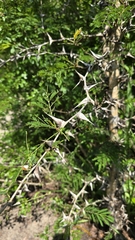
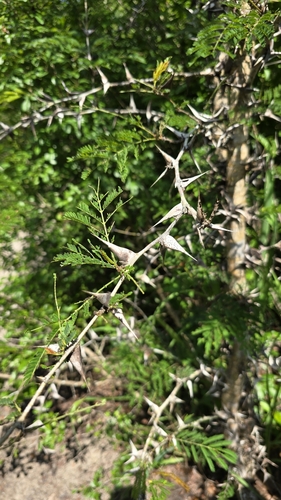
Sweet acacia
Photo: zihuadean · CC-BY-NC

Sweet acacia

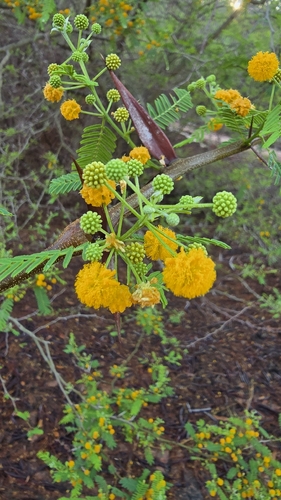
Vachellia farnesiana · huizache, güizache, aromo
The seeds contain an alkaloid and are used to kill rabid dogs in Brazil.
Fruit essential oil strengthened the effect of barbiturate sedatives in rats: possible interaction with sedatives.
No toxicology studies for this species; two related Acacia species have caused severe poisoning in livestock.
Stems carry many white spines 1-5 cm long.
  • Flowers: Flower essential oil used as a food flavoring
  • Pods: Seed pods roasted and eaten (Australian Aboriginal use); sour leaves used like tamarind in chutneys
Season: Fruits January to April (May)
Months in fruit (iNaturalist records in Mexico)
Sources (2)

Compiled October 2026 from published sources. Each card lists its sources.

Photo credits (114, iNaturalist)
Keep exploring