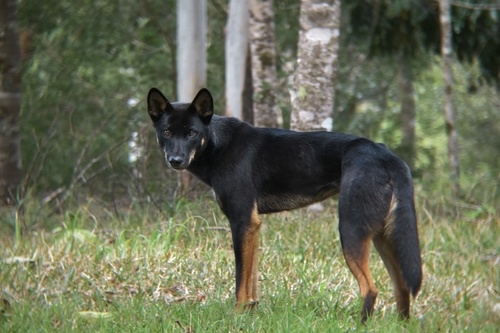
The dry forest behind the break, the mangrove lagoon, and the agricultural mosaic between them support a surprisingly rich mammal fauna. Most of it is nocturnal, cryptic, and undercounted.
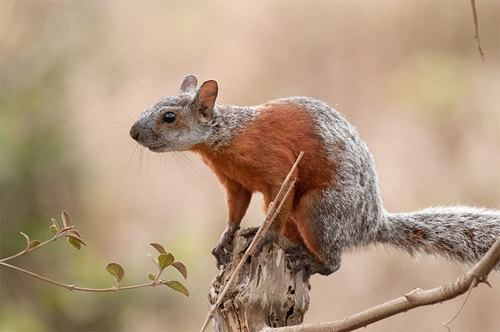
Ardilla vientre rojo
Mexican Gray Squirrel
Sciurus aureogaster
Trees + village, year-round
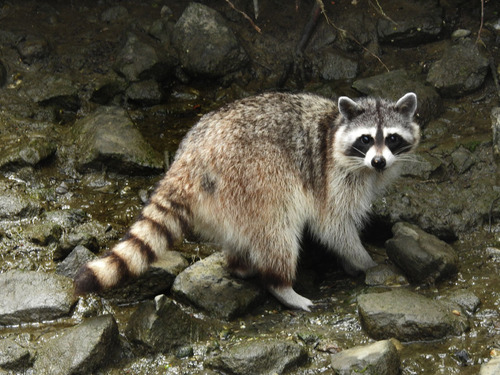
Mapache
Northern Raccoon
Procyon lotor
Estero edge, nocturnal
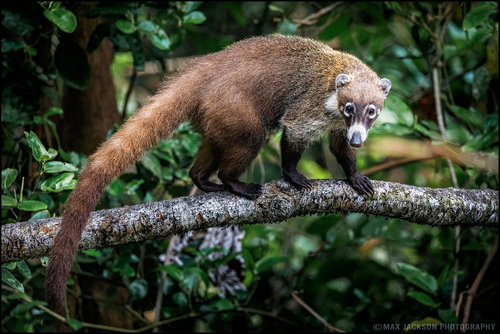
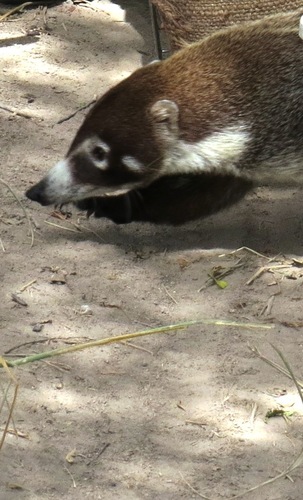
Tejón / Coatí
White-nosed Coati
Nasua narica
Bands of 5–15, daytime
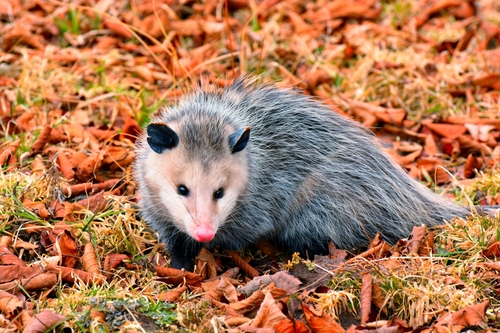
Tlacuache
Virginia Opossum
Didelphis virginiana
Nocturnal, omnivore
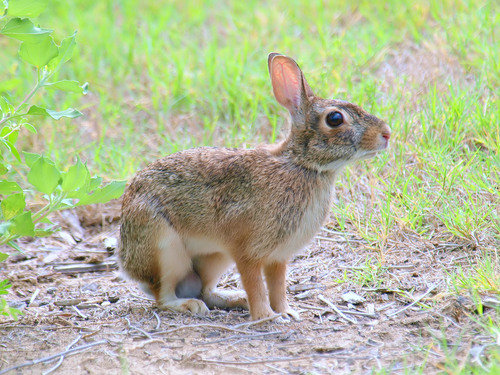
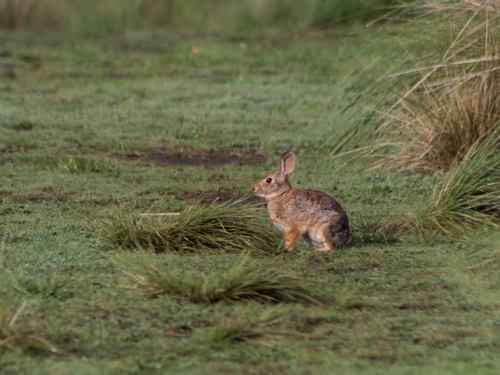
Conejo cola de algodón
Eastern Cottontail
Sylvilagus floridanus
Brush edges at dawn/dusk
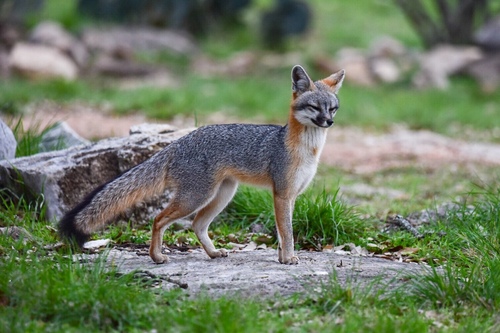
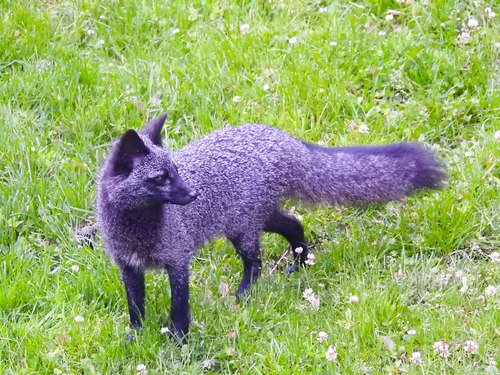
Zorra gris
Gray Fox
Urocyon cinereoargenteus
Dry forest, mostly nocturnal
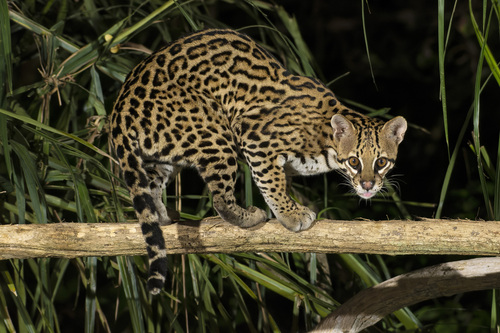
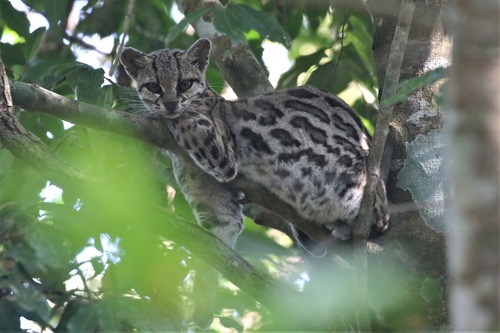
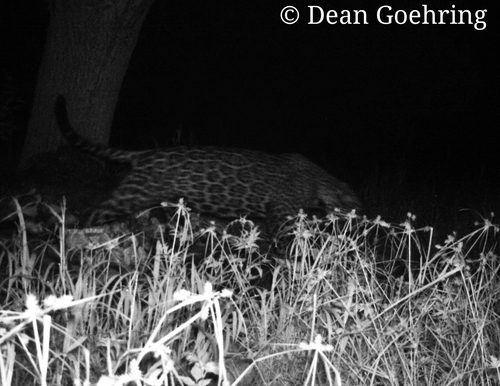
Ocelote
Ocelot
Leopardus pardalis
Dry forest, mostly nocturnal · NT
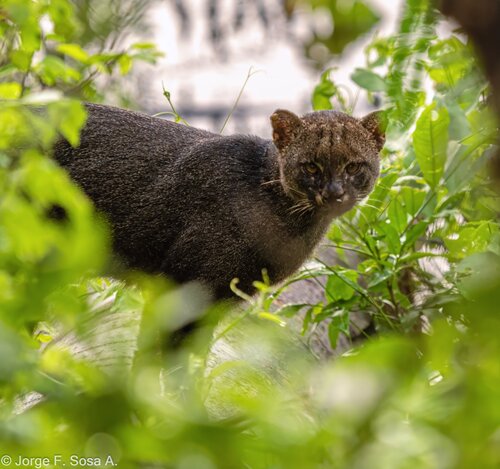
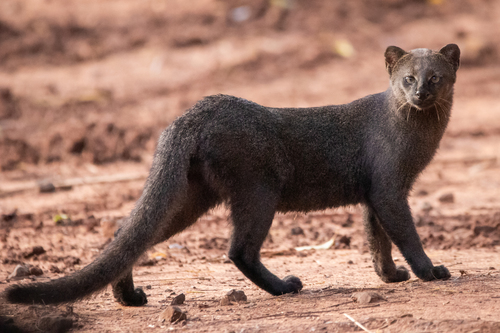
Jaguarundi
Jaguarundi
Herpailurus yagouaroundi
Slim, dark — village edges
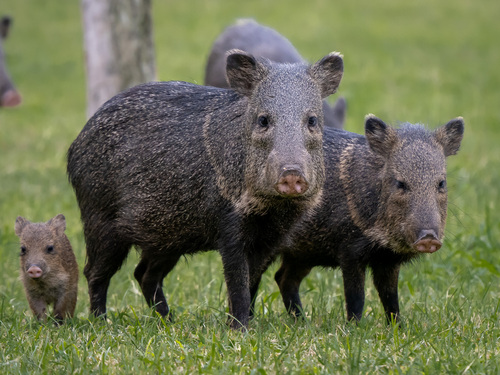
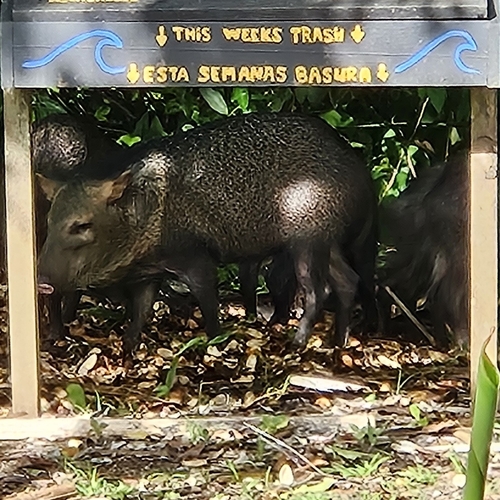
Pecarí de collar
Collared Peccary
Pecari tajacu
Bands in dry forest
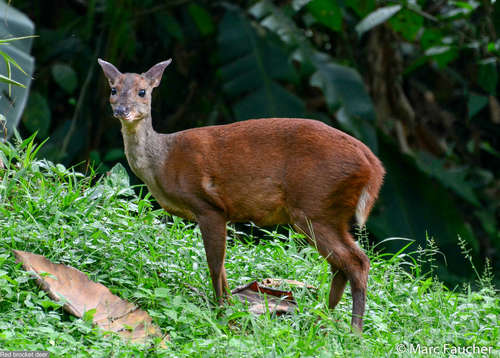
Temazate
Central American Red Brocket
Mazama temama
Small forest deer
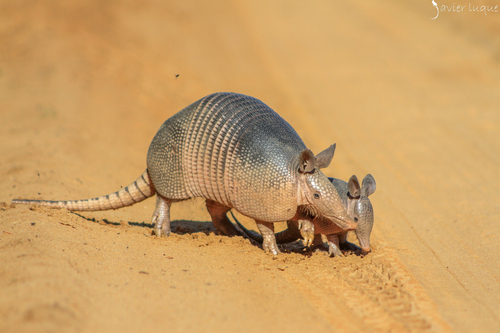
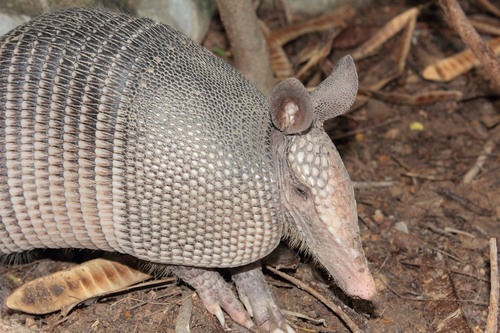
Armadillo
Nine-banded Armadillo
Dasypus novemcinctus
Nocturnal, ground-rooting
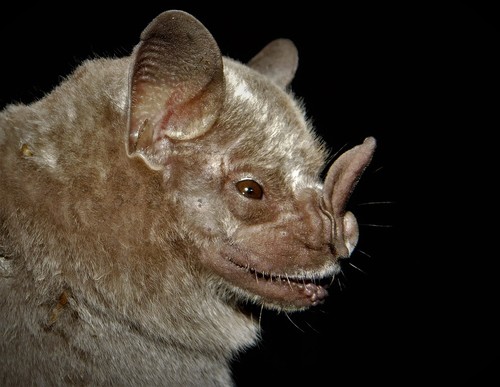
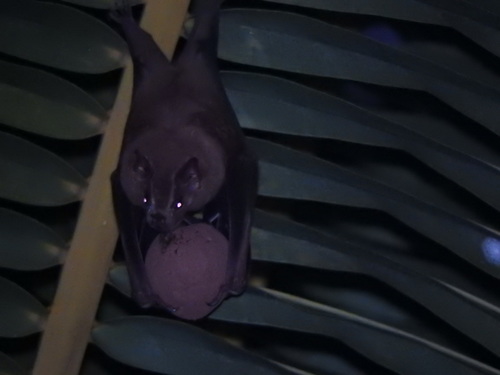
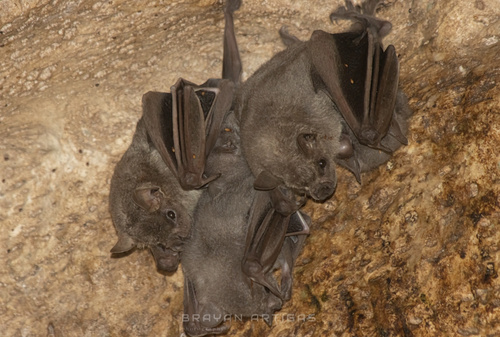
Murciélago frutero
Jamaican Fruit Bat
Artibeus jamaicensis
Common, fruit eater
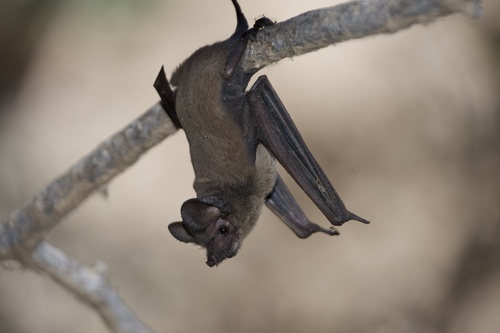
Murciélago cola de ratón
Mexican Free-tailed Bat
Tadarida brasiliensis
Huge colonies, insectivore
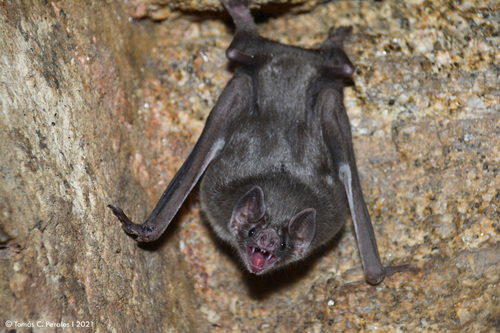
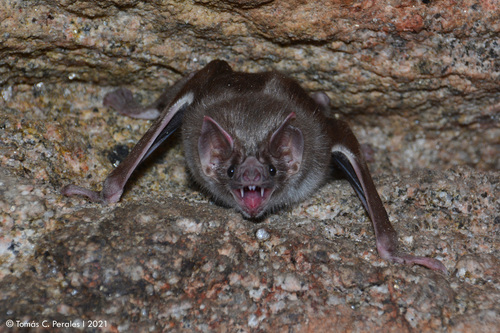
Vampiro común
Common Vampire Bat
Desmodus rotundus
Cattle blood feeder, NOT a threat to humans
Tursión
Bottlenose Dolphin
Tursiops truncatus
Year-round, see /whales/
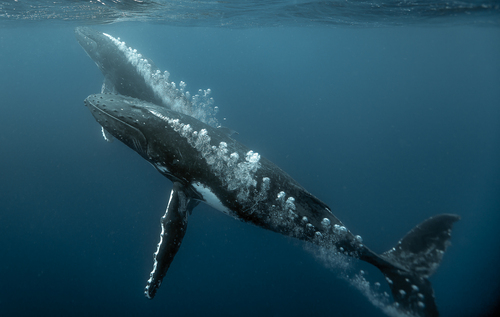
Ballena jorobada
Humpback Whale
Megaptera novaeangliae
Dec–Mar migration, see /whales/
Photos via iNaturalist (CC-licensed). The coati bands and tlacuache (opossum) are the mammals you're most likely to see; the ocelot and jaguarundi are reclusive but documented in the dry forest behind the village. Bats are everywhere — Tadarida free-tails roost in caves and feed on insects at sunset; the village wouldn't survive its mosquito load without them.

La Saladita sits at an ecological edge where three distinct land systems press against each other. Immediately inland of the beach, a mangrove-fringed lagoon — shallow, tidal, productive — provides feeding and refuge for raccoons, otters, and wading birds. Above the lagoon, a strip of tropical dry forest runs into the low foothills, losing and recovering its canopy with the rains. Beyond that, a patchwork of cattle pasture, lime orchards, and second-growth scrub fills the agricultural mosaic of the Petatlán lowlands.
This ecotone — mangrove meeting dry forest meeting agro-scrub — is exactly the habitat mosaic that generalist tropical mammals exploit most effectively. The white-nosed coati can spend a morning in the forest canopy eating figs, an afternoon in the lagoon margin turning over rocks for crabs, and a night in an orchard. The raccoon — mapache — barely needs the forest at all; the lagoon and village together supply everything it needs.
What the habitat lacks, relative to the wetter forests east of the Sierra Madre, is the large-mammal density that requires intact closed-canopy blocks. Jaguars and pumas use the interior sierra; the coastal corridor is marginal, fragmented habitat for the apex predators. What it has instead is a dense community of small and medium-sized generalists — the most diverse mammal guild in any Neotropical landscape — plus a bat fauna that probably numbers 40+ species and is almost entirely undocumented by citizen science.
The data below is honest about what exists and what is missing. iNaturalist has 295 research-grade Mammalia records within 50 km as of June 2026 — most of them squirrels and coatis photographed during the day. The nocturnal community, the bats, the cryptic skunks and opossums, are there; they're simply not being photographed.
A handful of species in this ecosystem are genuinely diurnal — active during daylight hours and habituated enough to human presence near the village and beach access road that opportunistic sightings are common. If you spend a week here, you will almost certainly encounter the squirrel and the coati. Peccary travel in groups and leave unmistakable tracks even when unseen.
The most frequently documented mammal in citizen-science records for this area — 70 iNaturalist observations in 50 km. Medium-large, with a reddish belly that can grade to orange on individuals in this latitude. Conspicuous and often bold near village trees, palms, and roadside mango groves.
Found throughout Mexican Pacific dry and humid forest, from sea level into the foothills. Diet is broad: seeds, nuts, fruit, fungi, occasional bird eggs. The squirrel's seed-caching behavior makes it an unintentional but significant agent of forest regeneration — seeds it buries and forgets become trees.
The tejón is impossible to miss if you encounter a band: ten to thirty animals moving through the forest understory, snouts tilted to the ground, ringed tails held vertical. They are the most socially complex mammal regularly visible here — females and juveniles travel in cohesive bands; adult males are largely solitary, and significantly larger.
Opportunistic omnivores with formidable dexterous forepaws. On this coast they exploit everything available: fruit, invertebrates, small vertebrates, turtle eggs if encountered, human food if left unattended. Bold around campsites. The 39 iNat records in 50 km almost certainly represent a fraction of the local population.
The jabalí looks like a pig and fills a similar ecological niche — rooting, social, territorial — but is taxonomically distant from Old World swine. Groups of 5–15 animals move in tight formation. Their scent glands on the back produce a strong musky odor that announces their presence. One confirmed iNat record in the 50 km radius, but peccary are documented throughout this dry-forest belt by regional surveys.
Important seed predators and soil disturbers. Their rooting opens ground for seedling establishment in ways that affect the forest understory structure. Trail cameras in similar Guerrero dry-forest sites regularly capture them.
The larger of the two Sylvilagus species likely present here, preferring drier open scrub and agricultural edges. The iNat records in this radius are European rabbit (Oryctolagus cuniculus, feral) rather than native cottontail — a common confusion at the field-photo level. True wild Sylvilagus are documented throughout the Guerrero lowlands by regional natural-history surveys, and the habitat along the beach-to-road corridor is suitable.
Primarily a dawn-dusk forager. Prey for nearly every carnivore on this list — their presence signals a healthy predator community. Most visible in the grassier areas between the road and the dry forest.
The majority of this mammal community is nocturnal or crepuscular. Raccoons, opossums, armadillos, and skunks do most of their living between dusk and dawn. The gray fox, if present, is crepuscular. Even species like the white-tailed deer and peccary shift their activity to low-light periods in areas with human disturbance. A headlamp on a slow walk along the lagoon edge after dark will reveal far more mammal life than any daytime survey.
The nocturnal mammals below are almost certainly underrepresented in iNaturalist by a factor of 5–10x relative to their true abundance. Most of the records for these species are incidental — animals caught on a phone camera at a campsite, or found dead on the road. A single camera trap running for a month at the lagoon edge would produce more data on raccoons, opossums, skunks, and armadillos than the entire citizen-science record to date.
The only marsupial north of the tropics, and one of the most adaptable mammals on the continent. The tlacuache occupies every habitat from dense primary forest to urban backyards, scavenging whatever the night provides. Its characteristic defense — thanatosis, the involuntary comatose state colloquially called "playing dead" — is an effective last resort against predators that lose interest in apparent carrion.
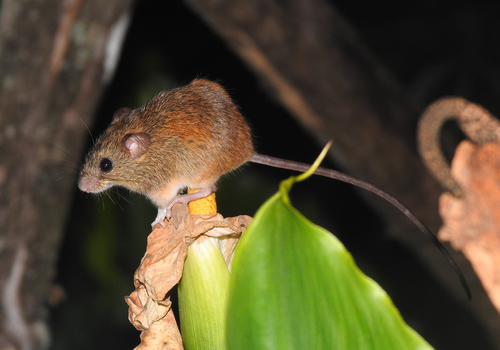
A second species, the Common Opossum (D. marsupialis), likely overlaps in this zone; it has a stronger association with humid tropical forest. The Balsas Mouse Opossum (Tlacuatzin balsasensis) has one iNat record in radius — a small, mouse-like marsupial and near-endemic of the Balsas Depression.
The mapache thrives in exactly the ecotone that La Saladita occupies: mangrove lagoon + beach + scattered human settlement. It forages at the water's edge for crabs, clams, and fish; raids sea turtle nests during nesting season; and investigates every unsealed food container. Highly intelligent, dexterous-pawed, and essentially fearless around humans once habituated.
Ecologically, raccoons are both predator and prey — important jaguar, puma, and ocelot food in intact habitat. Their high density near human settlements reflects the effectiveness of their generalist strategy, not a healthy predator-prey balance. 23 iNat records in radius; the actual population is much larger.
The gray fox is uniquely arboreal among North American canids — it regularly climbs trees to escape predators or access fruit, using semi-retractable claws and rotating forelimbs unusual in the dog family. Crepuscular to nocturnal. No iNat records within 50 km, but the species is well documented throughout the Guerrero Pacific dry-forest belt by regional natural-history surveys. Its cryptic habits and wariness of humans keep it out of camera-phone range.
Diet is broadly omnivorous: small mammals, birds, insects, fruit, and carrion. In dry forest it plays an important role as a mesopredator controlling rodent and rabbit populations in the absence of larger felids.
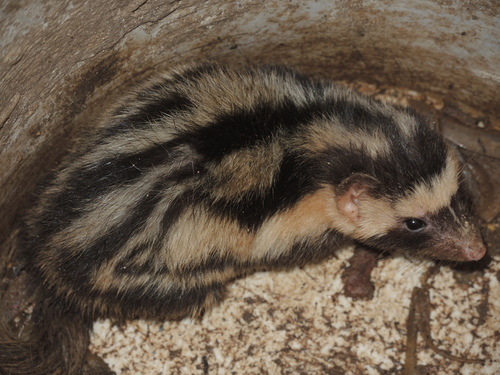
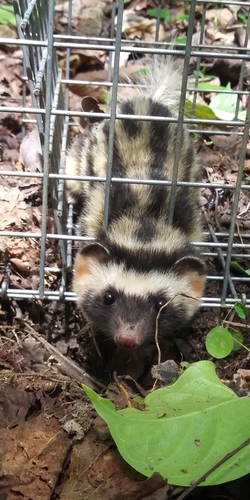
One of the most geographically restricted mammals in Mexico. The Pygmy Spotted Skunk is endemic to the Mexican Pacific slope — its entire documented range runs from southern Sinaloa to Oaxaca, almost entirely within the tropical dry forest zone. La Saladita sits in the core of that range. Two iNat records in the 50 km radius make this one of the more meaningfully documented cryptic species here.
Small — roughly the size of a large rat — with intricate white spotting and streaking on black fur. Strictly nocturnal and secretive. IUCN Vulnerable due to its restricted range; any ongoing loss of Pacific dry forest reduces its available habitat.
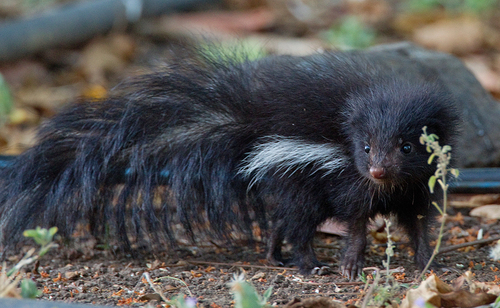
Distinguished from the Striped Skunk by a notably longer, fluffier tail and a wider distribution of white coloration on the back — though individual variation is substantial. More widespread than the Pygmy Spotted Skunk, tolerating agricultural edge and human-disturbed habitat. No local iNat records, but the species is documented throughout Guerrero dry forest.
Like all skunks, a primary consumer of invertebrates and small vertebrates — beetles, grubs, scorpions, small mice. Their burrowing and digging behavior aerates soil and disturbs the surface litter layer in ways that facilitate plant germination.
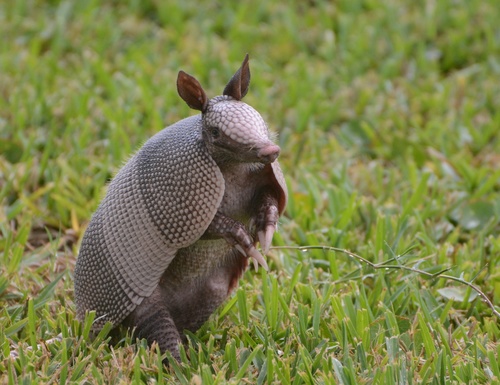
The armored tanks of the dry forest floor. Dasypus mexicanus roots through leaf litter with powerful forelimbs, excavating burrows and probing soil for beetle larvae, earthworms, and ants. Seven iNat records in 50 km — the best-documented nocturnal non-bat mammal after the raccoon and opossum. Frequently encountered dead on roads, which is how most citizen-science records originate.
Armadillos are an important prey species for ocelot, jaguarundi, and puma. Their burrowing creates microhabitat used by reptiles, invertebrates, and smaller mammals. The bony plates are not a complete defense — predators with sufficient jaw force can penetrate them, and armadillos in flight are primarily trying to reach a burrow, not to resist attack.
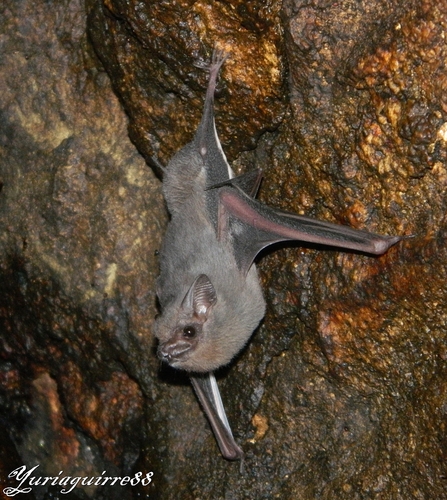
Stand on the beach or lagoon edge at dusk and watch the sky. The erratic, rapid silhouettes appearing minutes before full dark are almost certainly bats. The Guerrero Pacific dry forest supports an estimated 40+ bat species — insectivores, frugivores, nectarivores, and at least one hematophage (vampire). iNaturalist and GBIF have records for five of them. The other 35+ are present; they simply cannot be documented by photographs alone.
Documenting bats requires mist-netting or acoustic surveys — methods that require permits, specialized equipment, and trained personnel. Citizen-science photography works for bats only when they are roosting and accessible (a bat found in a building) or when someone examines a specimen in hand (roadkill, caught bat). The records here are almost certainly fewer than 25% of the species present. The documented bat fauna of similar Guerrero dry-forest habitat includes species in Phyllostomidae, Emballonuridae, Molossidae, Vespertilionidae, Natalidae, and Mormoopidae. No public mist-net or acoustic dataset for this corridor exists in GBIF or iNaturalist.
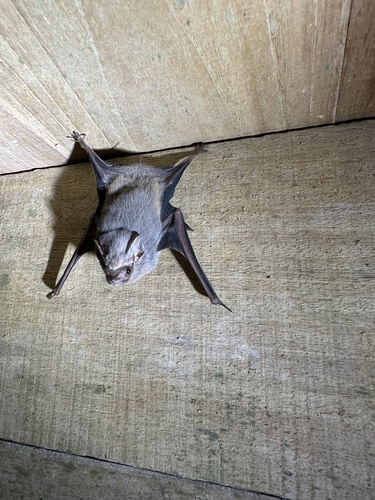
The best-documented bat in the iNaturalist record for this area — 14 records in 50 km, confirmed in GBIF for the bounding box. A small emballonurid bat, typically roosting in tight clusters on hollow trees or rock outcrops, often in exposed situations that make them findable during the day. Males have a gland on the wing ("sac") that produces scent compounds used in territorial and courtship displays.
A Pacific coast specialist with a distribution closely tracking lowland tropical dry and thornscrub forest from Sonora to Ecuador. La Saladita sits in the middle of its range. Insectivorous, foraging over open ground, water, and forest edges in fast, erratic flight.
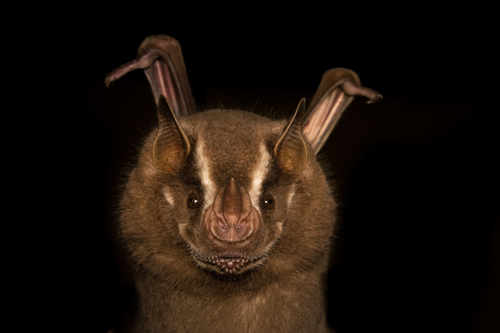
One of the largest phyllostomid bats in Mexico — wingspan approaching 50 cm, weight up to 80g. Primarily frugivorous, with a strong association with fig trees (Ficus spp.) that produce fruit year-round. The bat's role in seed dispersal is ecologically critical: figs swallowed whole are defecated in flight over distances of hundreds of meters, seeding new trees well beyond the parent canopy.
Four iNat records in 50 km. Multiple Artibeus species are likely present here: A. jamaicensis (common), A. lituratus (large), and A. hirsutus (Pacific near-endemic, see below). Species identification from photographs requires close examination; many records may be misidentified or identified only to genus.
A near-endemic of the Mexican Pacific slope, distributed from Jalisco to Guerrero in a narrow coastal band. IUCN Near Threatened due to its restricted range and dependence on tropical dry forest, which has been heavily cleared throughout western Mexico. Distinguishable from A. lituratus by its denser, woollier fur and slightly smaller size, but field identification is difficult without direct examination.
La Saladita is near the southern end of its confirmed range. One iNat record in radius. Its presence here would represent a near-endemic Pacific species using one of the remaining intact dry-forest fragments in the Petatlán corridor. Worth targeting in any future bat survey.
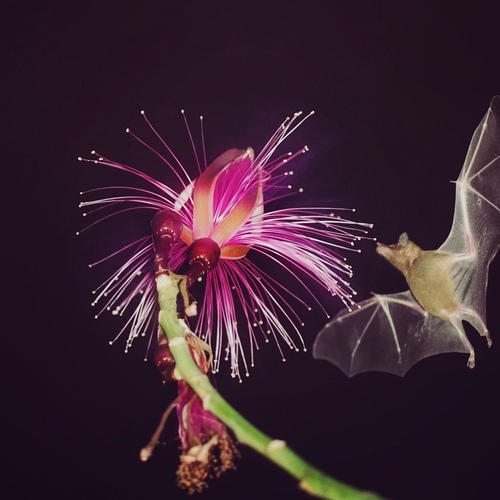
This bat pollinates the dry forest from below — a nectar specialist whose brush-tipped tongue is adapted for reaching into tubular flowers. Columnar cacti (Pachycereus, Stenocereus), agaves, and organ-pipe cactus depend on it for pollination throughout Pacific Mexico. Its migratory corridor runs north along the Pacific coast in spring and south in fall — exactly the coastal route that passes Saladita.
Previously IUCN Vulnerable; downlisted to Least Concern in 2019 following confirmed population recovery driven in part by agave-farming practices and habitat protection in Mexico. No local records, but documented in Guerrero as a migratory species. Peak passage April–June northbound, September–October southbound.
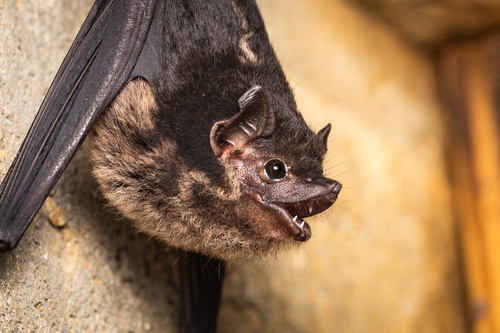
The most abundant bat in Mexico by sheer colony size. Roosts in buildings, bridges, and caves in colonies ranging from hundreds to millions of individuals. High-flying and fast — one of the fastest flying animals, capable of exceeding 60 mph in level flight. No iNat records in radius, but almost certainly present year-round wherever there is a suitable roost structure (a concrete bridge, a barn, a cave).
Insectivore with enormous ecological impact at scale — a single colony of one million bats can consume several tons of insects per night. Their guano deposits are significant nitrogen inputs to cave and building ecosystems. Visible as tight, fast-flying groups at dusk.
The only mammal that feeds exclusively on blood. Desmodus rotundus uses heat-sensing pits and infrared-detecting neurons in its nose to locate blood vessels close to the skin surface — typically on the legs or ears of sleeping livestock. The bite is shallow; anticoagulants in the saliva keep the wound seeping. The primary concern for cattle ranchers in Mexico is not blood loss but rabies transmission.
Present throughout Mexican tropical lowlands wherever cattle ranching occurs. Near Saladita: livestock density in the immediate coastal area is low, which limits local vampire bat populations relative to cattle country further inland. No iNat records in radius. Probably present but at low density.
These are the mammals that require either luck, a camera trap, or a significant amount of intact habitat beyond the immediate coastal strip. Some — the jaguarundi and ocelot — have confirmed records within 50 km. Others — puma, jaguar — are present in Guerrero but remote from this coast. The deer is genuinely present in the immediate landscape; you are more likely to see one at dawn on the road than anywhere else.
The odd one out among Neotropical cats: diurnal, uniformly colored (gray to chestnut, never spotted), and with a long sinuous body that looks more like a large weasel than a cat. The jaguarundi is the most likely wild felid to be seen in daylight near La Saladita. One iNat record in the 50 km radius — confirmed presence.
Despite its Least Concern status globally, it is rarely observed and almost never photographed in citizen-science surveys. Its diurnal habits make it more detectable than ocelot or puma, but its dense-cover habitat preference keeps it out of open view. Dense riparian corridors and forest edges along the road to Saladita are the best search habitat.
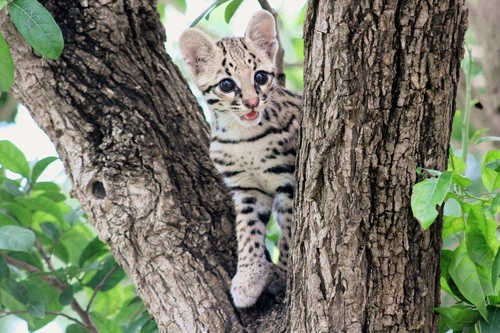
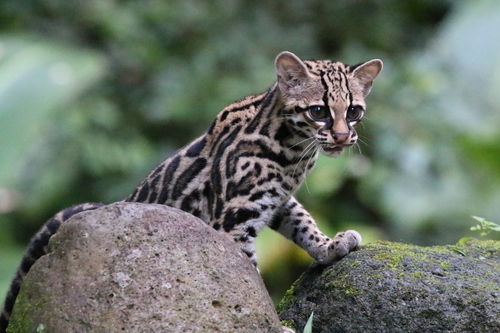
Two iNat records in the 50 km radius make the ocelot one of the most credibly confirmed carnivores in this dataset. Nocturnal and strictly tied to forest cover — unlike the jaguarundi, the ocelot does not tolerate open habitat. Medium-sized (8–16 kg), beautifully spotted. Primary prey is small to medium mammals: rodents, rabbits, armadillos, and occasionally birds and reptiles.
The ocelot's presence here confirms that the dry forest fragments behind the coastal plain are large enough and intact enough to support at least a low-density felid population. In habitat this fragmented, population connectivity with the larger forest blocks of the Sierra Madre interior is the long-term survival question.
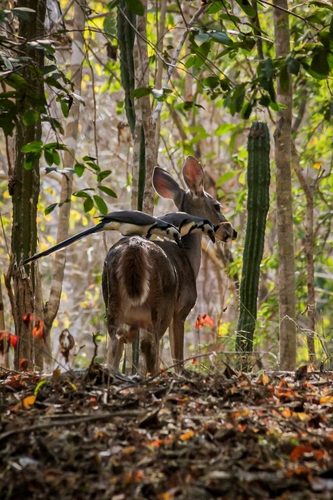
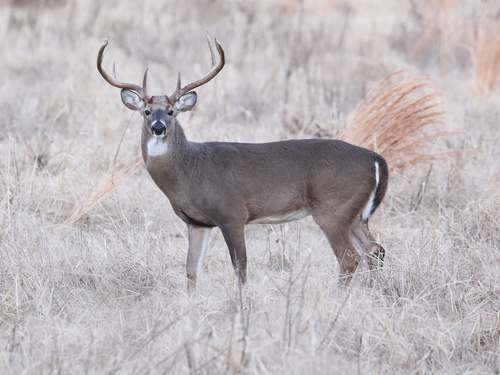
The local subspecies, O. v. acapulcensis, is smaller and darker than the northern white-tailed deer. 17 iNat records in the 50 km radius, including subspecies-specific identifications — the deer is genuinely present in the landscape and well-documented for a large ungulate in a heavily photographed area. Most sightings near dawn or dusk along the road and forest edge.
In the absence of large predators along the immediate coast, deer populations are regulated primarily by hunting pressure and dry-season forage scarcity. They are an important prey item for puma and jaguar in the interior foothills, and were historically central to indigenous subsistence in the Guerrero lowlands.
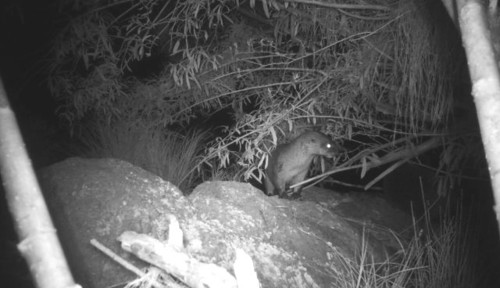
Two iNat records in the 50 km radius. The lagoon and river system behind Saladita is potential river otter habitat — fish-productive, relatively undisturbed, connected to larger drainages. IUCN Vulnerable across its range due to habitat loss, hunting, and water quality decline. If the local population is real, this lagoon system is worth protecting specifically for it.
Diurnal to crepuscular. Highly mobile — river otters in intact habitat range many kilometers of waterway. A sighting at or near the Saladita lagoon would be a genuine encounter with one of Mexico's more threatened medium-sized carnivores.
Present in the Sierra Madre del Sur interior behind the Guerrero coast — camera-trap studies in similar Mexican Pacific montane dry forest document puma at elevations from roughly 200 m to over 2,000 m. The coastal strip near Saladita is fragmented and low-elevation; any individual detected here would likely be a dispersing animal moving between larger forest blocks.
No iNat or GBIF records in the 50 km study area. Not expected in the immediate coastal corridor. Including it here because it is part of the same predator guild that shapes the prey community — the deer and peccary populations that exist near the coast are partially structured by the puma population in the hills above.
The jaguar's historic range included the Mexican Pacific coastal corridor, using mangrove systems and lowland forest that once connected the coast to the interior. That connectivity is largely severed by agriculture and development throughout Guerrero's coastal lowlands. Small populations persist in the Sierra Madre del Sur interior; a 2021 CONANP-coordinated camera-trap program documented jaguar presence in several Guerrero mountain ranges.
Any coastal sighting near Saladita would be an exceptional event — almost certainly a young dispersing male covering large distances through fragmented landscape. No records in the study area. Included here because the species was present historically and because several regional organizations are actively working to maintain genetic corridors between Guerrero jaguar populations.
iNaturalist is the primary public platform for documenting wildlife at a location like this. An account is free; observations sync automatically and become part of the global database used by researchers, conservation managers, and monitoring programs.
For mammals specifically: even a blurry photo is useful. A sharp portrait of a squirrel tells taxonomists nothing they don't already know. A blurry, underexposed photo of an ocelot caught in flashlight at the edge of the lagoon at 2 am is a data point that doesn't exist yet. The bar for contribution is: did the animal exist, and was a photo made? The quality filter for mammals is lower than for insects or birds.
Most valuable contributions currently missing from this area:
For those with camera traps: a single trap on the lagoon edge, set for 30 days and pointing at a game trail or waterline, would likely triple the local mammal record. iNaturalist accepts camera-trap observations; set the observation date to when the photo was taken, use the device location, and note "camera trap" in the notes field.
Submit an iNaturalist observation →Primary source: iNaturalist API v1, radius query 50 km from La Saladita (17.5897°N, 101.4317°W), class Mammalia (taxon_id 40151). Both research-grade and all-grade records included. Excludes Cetacea (without_taxon_id=152871) and Homo sapiens (43584). Results as of June 2026: 295 research-grade records, 457 total, 20 documented species. Script: scripts/build_mammal_climatology.py → functions/api/_mammal_climatology.js. Live recent-sightings query runs at page load via /api/mammals.
Secondary source: GBIF Occurrence Search API v1, classKey=359 (Mammalia), bounding box lat 17.0–18.2°N / lon -102.0–-100.9°W, hasCoordinate=true, 2000–2025. Cetacea and human records excluded in post-processing. GBIF total count for the bounding box: 2,186 records, 12 documented non-domestic species. GBIF records include museum specimens, researcher observations, and iNaturalist contributions synced to GBIF.
Species names follow the Mammal Diversity Database (MDD), the current standard for mammalian taxonomy. IUCN Red List statuses from IUCN Red List of Threatened Species. Mexican legal protection: all listed wild mammals are protected under NOM-059-SEMARNAT and Ley General de Vida Silvestre; additional species listed under CITES appendices. Habitat and ecological descriptions draw on Ceballos & Oliva (eds., 2005) Los Mamíferos Silvestres de México and regional natural-history literature.
Mammal occurrence data from citizen-science platforms (iNaturalist, GBIF) systematically undersamples nocturnal, cryptic, and colonial species. Bats are almost entirely absent from the record despite certainly representing the most species-rich mammal order in this landscape. The documented species list here is a floor, not a ceiling. No camera-trap data, acoustic bat surveys, or mist-net programs exist for this corridor in public databases as of June 2026. Species listed under "regional literature only" are documented in the scientific literature for the Mexican Pacific dry-forest belt but lack confirmed records within the 50 km study area.
Monthly distribution data is not reproduced in the page text because sample sizes are too small for most species to support phenological inference. Full monthly count data is available via the /api/mammals endpoint.
The three highest-value additions to the dataset would be: (1) a camera-trap deployment at the lagoon edge and forest margin for 30–90 days; (2) an acoustic bat survey for 2–5 nights using an AudioMoth or similar recorder; (3) systematic reporting of roadkill on the coast road to Saladita, which disproportionately captures nocturnal species. All of these are within reach of a motivated researcher or organized volunteer program. iNaturalist accepts camera-trap and acoustic observations; even a single well-documented record of an ocelot, a skunk, or an unknown bat species would be a measurable contribution.