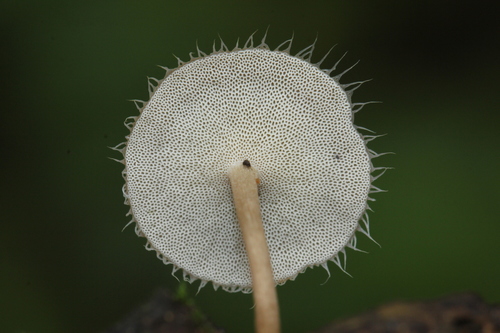
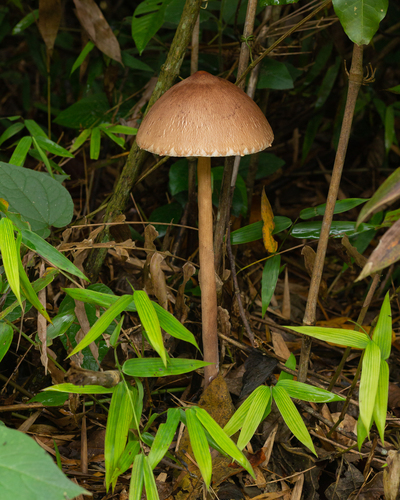
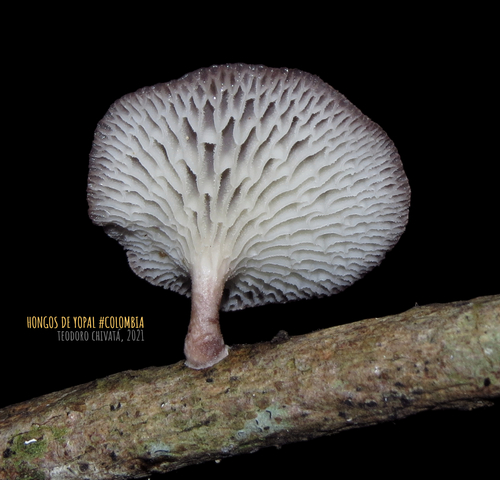
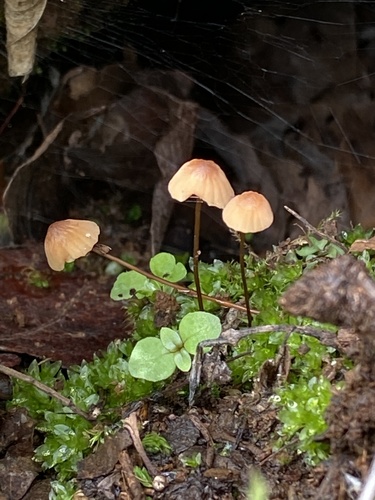
No mycological survey of this coastline exists in any major database — what's documented here is a floor built from incidental iNaturalist observations, not a systematic survey.
220+ taxa in GBIF+iNat combined records
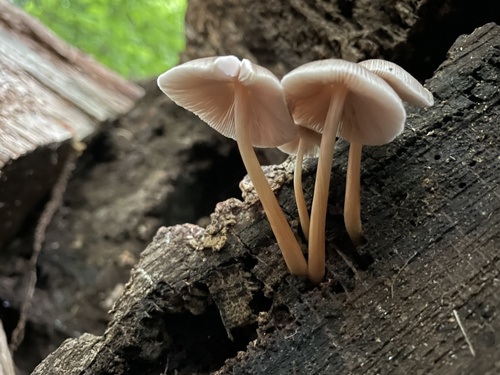
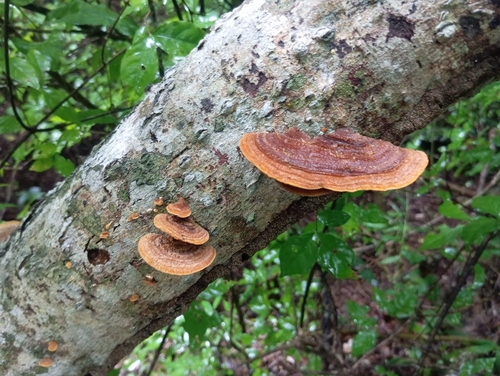
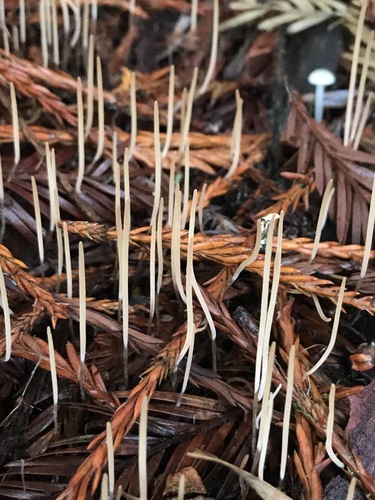
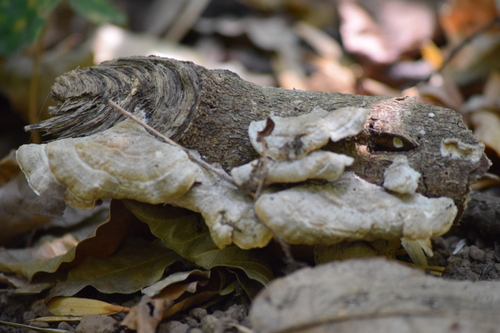
Bracket fungi, cup fungi, wet-season agarics — the photo field guide.
Mushrooms you'll encounter
Bracket fungi (year-round on dead wood)
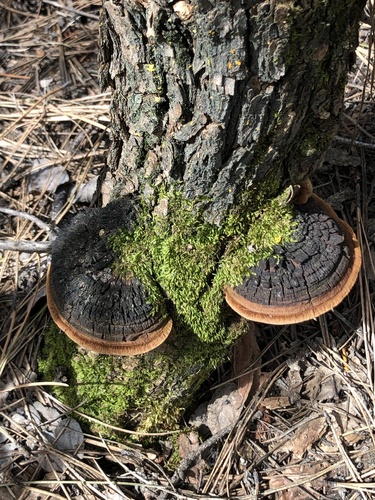
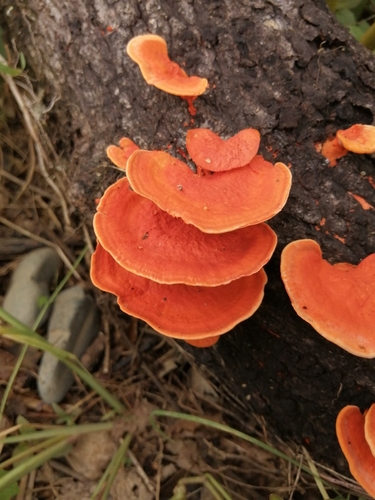 Yesca roja
Cinnabar Polypore
Pycnoporus sanguineus details →
Bright orange-red, common
Yesca roja
Cinnabar Polypore
Pycnoporus sanguineus details →
Bright orange-red, common
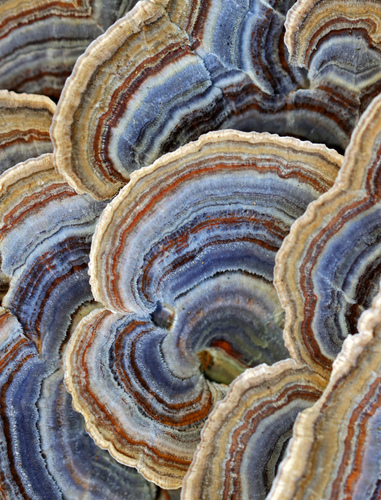 Cola de pavo
Turkey Tail
Trametes versicolor details →
Banded, leathery
Cola de pavo
Turkey Tail
Trametes versicolor details →
Banded, leathery
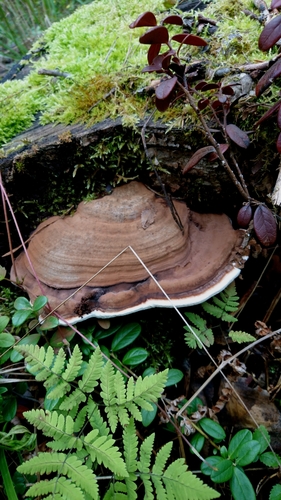 Pezuña / Reishi del bosque
Artist's Conk
Ganoderma applanatum details →
Large flat shelves on trees
Pezuña / Reishi del bosque
Artist's Conk
Ganoderma applanatum details →
Large flat shelves on trees
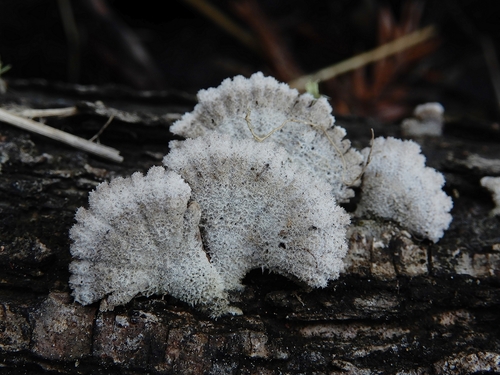 Hongo de hendidura
Split Gill
Schizophyllum commune details →
Tiny, on every dead branch
Hongo de hendidura
Split Gill
Schizophyllum commune details →
Tiny, on every dead branch
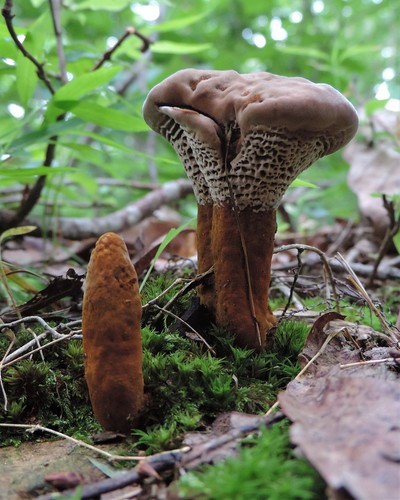
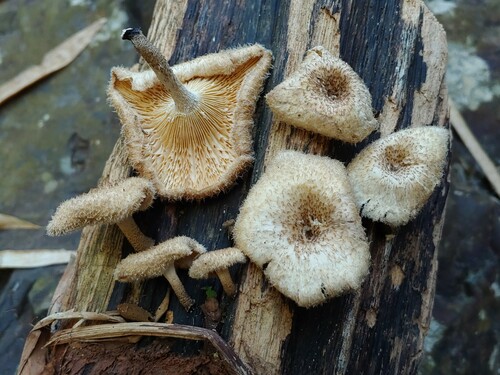 Lentinus peludo
Hairy Lentinus
Lentinus crinitus details →
Funnel-shaped, hairy stipe
Lentinus peludo
Hairy Lentinus
Lentinus crinitus details →
Funnel-shaped, hairy stipe
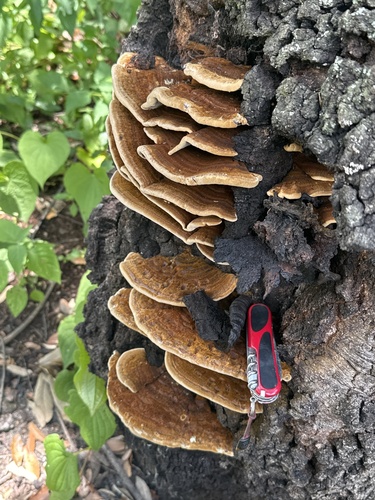
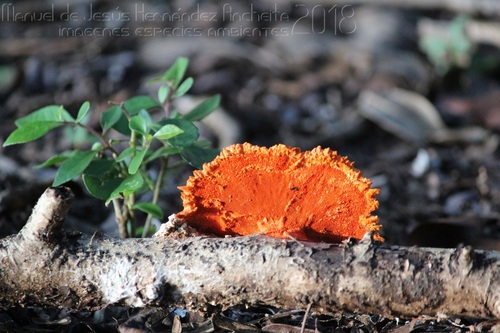 Trametes sangrante
Bleeding Trametes
Trametes sanguinea details →
Stains red when cut
Trametes sangrante
Bleeding Trametes
Trametes sanguinea details →
Stains red when cut
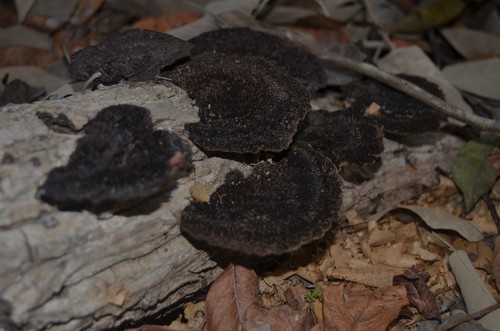 Hexagonia
Hexagonia hydnoides details →
Bracket, dry tropical forest
Hexagonia
Hexagonia
Hexagonia hydnoides details →
Bracket, dry tropical forest
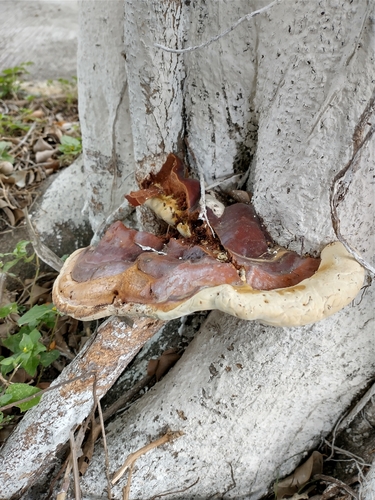 Ganoderma policromo
Polychrome Bracket
Ganoderma polychromum details →
Bracket, hardwood logs
Ganoderma policromo
Polychrome Bracket
Ganoderma polychromum details →
Bracket, hardwood logs
Cup fungi & oddities
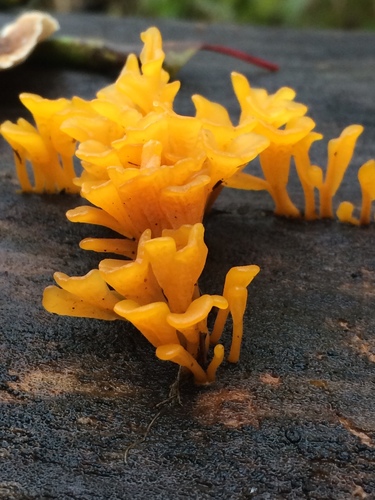
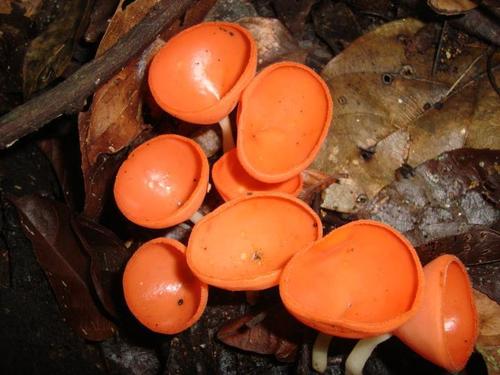 Copita anaranjada
Tropical Orange Cup
Cookeina sulcipes details →
Bright orange, on rotting wood
Copita anaranjada
Tropical Orange Cup
Cookeina sulcipes details →
Bright orange, on rotting wood
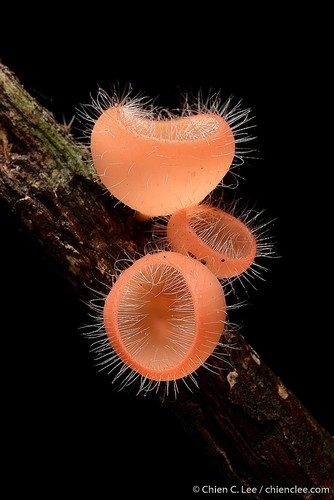 Copita peluda
Hairy Cup Fungus
Cookeina tricholoma details →
Goblet-shaped, fringed rim
Copita peluda
Hairy Cup Fungus
Cookeina tricholoma details →
Goblet-shaped, fringed rim
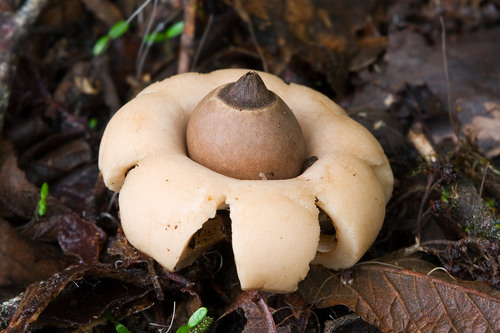 Estrella de tierra
Rounded Earthstar
Geastrum saccatum details →
Star-shaped opening
Estrella de tierra
Rounded Earthstar
Geastrum saccatum details →
Star-shaped opening
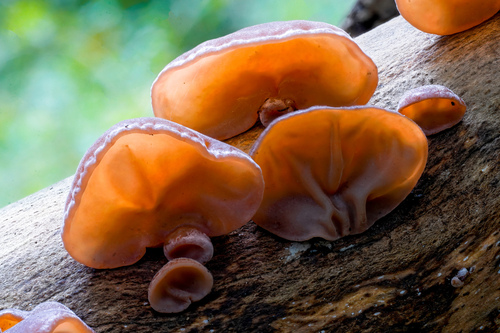 Oreja de Judas
Wood Ear
Auricularia auricula-judae
Edible, rubbery, on dead wood
Oreja de Judas
Wood Ear
Auricularia auricula-judae
Edible, rubbery, on dead wood
Wet-season agarics (Aug–Oct)
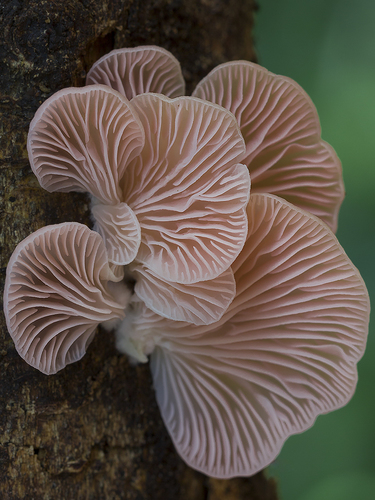 Orejón rosa
Pink Oyster Mushroom
Pleurotus djamor details →
Edible, fan-shaped
Orejón rosa
Pink Oyster Mushroom
Pleurotus djamor details →
Edible, fan-shaped
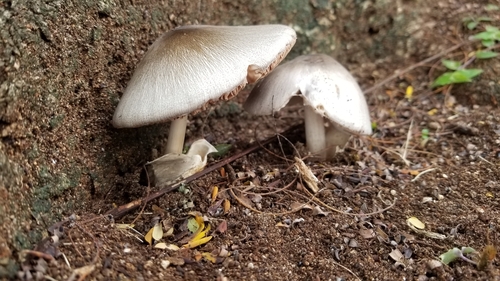 Hongo de paja
Paddy Straw Mushroom
Volvariella volvacea details →
Edible, on rotting straw
Hongo de paja
Paddy Straw Mushroom
Volvariella volvacea details →
Edible, on rotting straw
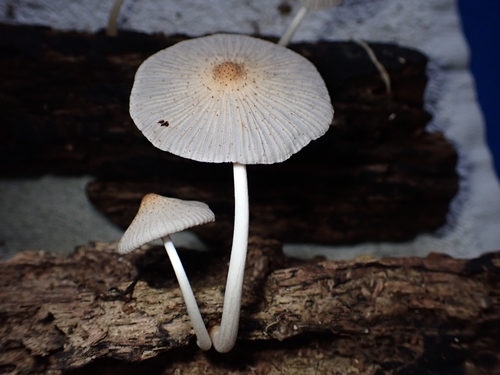
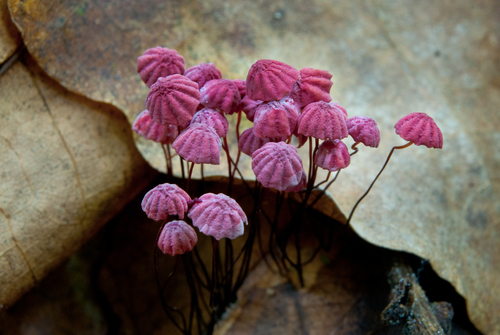 Marasmius rojo
Red Marasmius
Marasmius haematocephalus details →
Tiny, bell-shaped, parachute
Marasmius rojo
Red Marasmius
Marasmius haematocephalus details →
Tiny, bell-shaped, parachute
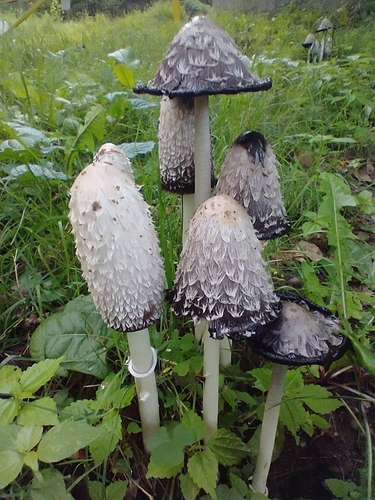 Apagavelas / Barbas de chivo
Shaggy Mane
Coprinus comatus details →
Edible young; dissolves into ink
Apagavelas / Barbas de chivo
Shaggy Mane
Coprinus comatus details →
Edible young; dissolves into ink
Know-before-you-touch
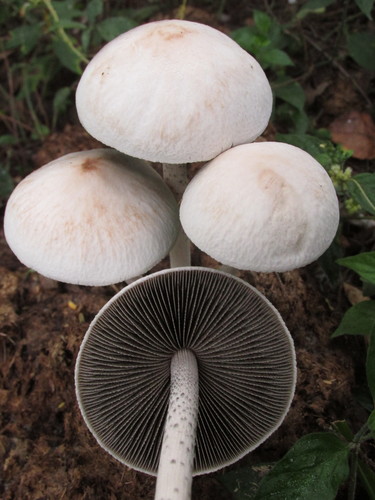
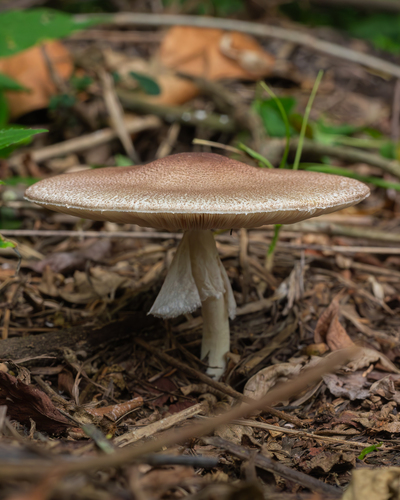
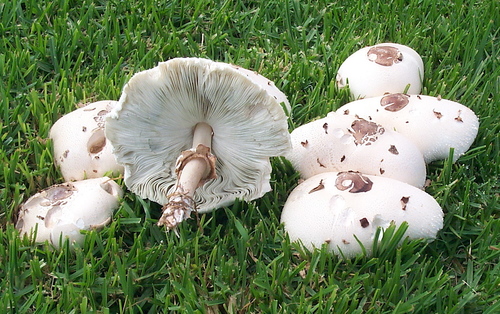 Parasol verde
Green-spored Parasol
Chlorophyllum molybdites details →
Most-poisoned MX mushroom — looks edible, isn't
Parasol verde
Green-spored Parasol
Chlorophyllum molybdites details →
Most-poisoned MX mushroom — looks edible, isn't
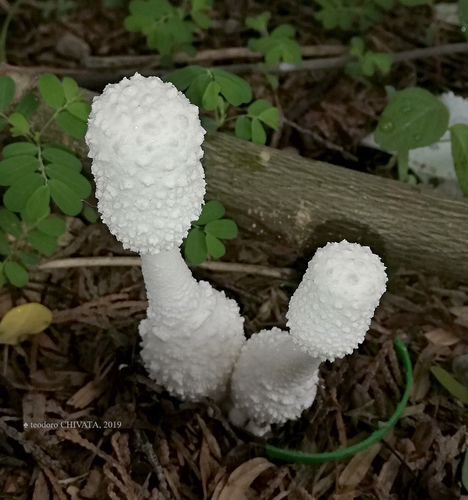
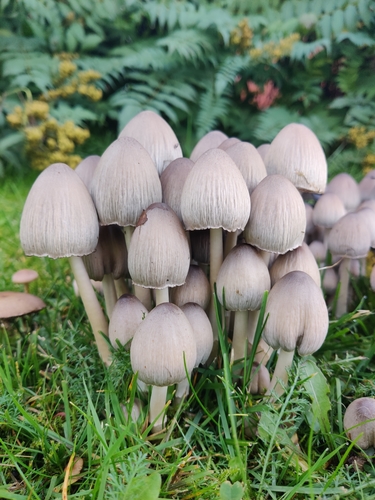 Tintero
Common Ink Cap
Coprinopsis atramentaria details →
Toxic with alcohol (disulfiram-like)
Tintero
Common Ink Cap
Coprinopsis atramentaria details →
Toxic with alcohol (disulfiram-like)
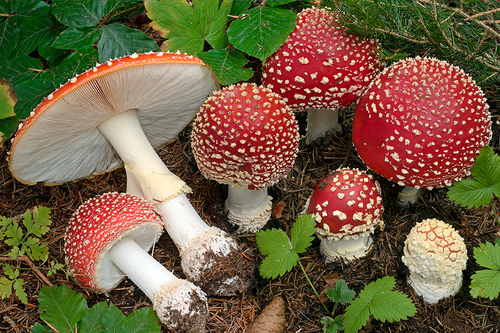 Hongo matamoscas
Fly Agaric
Amanita muscaria details →
Iconic red-with-white-spots; toxic
Hongo matamoscas
Fly Agaric
Amanita muscaria details →
Iconic red-with-white-spots; toxic
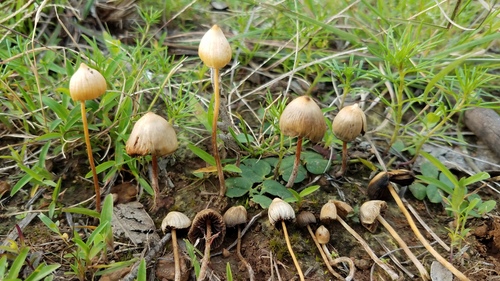
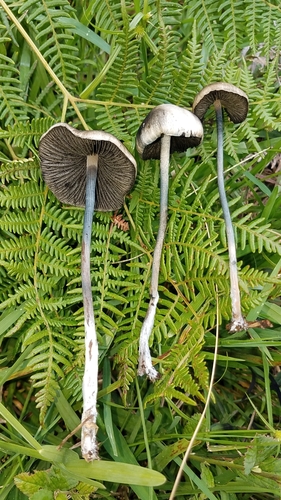 Pajaritos azules
Blue Meanies
Panaeolus cyanescens details →
Psilocybin, bruises blue
Pajaritos azules
Blue Meanies
Panaeolus cyanescens details →
Psilocybin, bruises blue
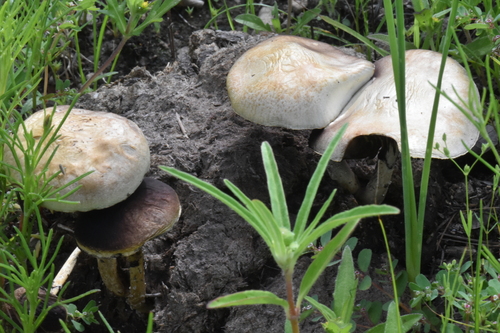 Hongo dorado
Golden Teacher
Psilocybe cubensis details →
Psilocybin, dung-loving
Hongo dorado
Golden Teacher
Psilocybe cubensis details →
Psilocybin, dung-loving
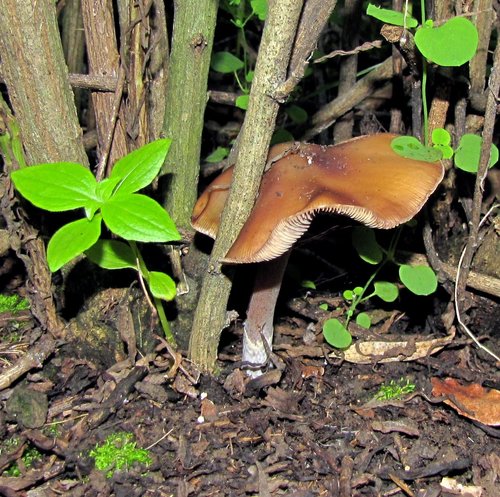
 Teonanácatl
Psilocybe mexicana details →
Psilocybin, ancient use
Teonanácatl
Teonanácatl
Psilocybe mexicana details →
Psilocybin, ancient use
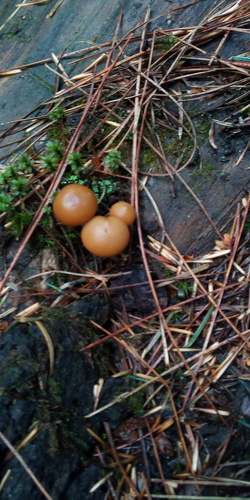
 Derrumbe
Psilocybe caerulescens details →
Psilocybin, landslide sites
Derrumbe
Derrumbe
Psilocybe caerulescens details →
Psilocybin, landslide sites
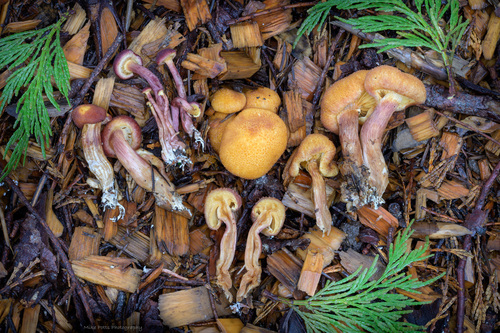
 Galerina mortífera
Deadly Skullcap
Galerina marginata details →
DEADLY lookalike — do not eat
Galerina mortífera
Deadly Skullcap
Galerina marginata details →
DEADLY lookalike — do not eat
Photos via iNaturalist (CC-licensed). The dry forest behind Saladita is mostly bracket-fungus country year-round — turkey tails, split gills, and bleeding polypores on every dead branch. The agarics (true mushrooms) come up Aug–Oct after the rains start. Never eat a wild mushroom from a photo ID alone — Chlorophyllum molybdites is the most-poisoned mushroom in Mexico precisely because it looks like the edible parasols.
The rainy-season pasture mushrooms.
Mexico is the most ethnomycologically-documented country on earth — R. Gordon Wasson's 1957 Life Magazine article on María Sabina's velada ceremonies in Mazatec Huautla is what introduced the Western world to psilocybin mushrooms. Two psilocybin-active species are common in the cattle-grazed pastures behind Saladita during the summer rainy season (June through September). Both fruit on or around fresh cow dung, both bruise an intense indigo blue when handled — the literal signature of psilocin oxidation. One has 405 research-grade iNat records across Guerrero state; the other has 770. Two records of the first species are confirmed within 50 km of Saladita.
Several deadly mushrooms grow in similar habitat. Galerina marginata (rust-brown spore print, amatoxin-containing, fatal liver failure) is the most-cited lookalike. The reliable separator: psilocybin-active mushrooms drop dark purple to black spores; Galerina drops rust-brown. Always take a spore print before any further consideration. Mexican federal law (Article 245 of the Ley General de Salud) classifies psilocybin as a controlled substance; indigenous ceremonial use has long-standing cultural exemption (Mazatec, Mixtec, Nahua) but recreational use is technically illegal. This page documents ecology and identification only — not consumption guidance.
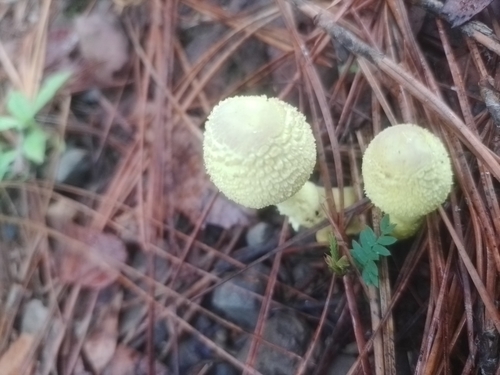
Small cap (1.5–4 cm), tan-to-pale-gray when fresh, intensely staining indigo-blue with even gentle handling. The strongest blue-bruiser of any common Mexican Psilocybe-relative. Pantropical dung-obligate — fruits directly on cow patties during the rainy season. 405 research-grade iNat records across Guerrero; 2 records within 50 km of Saladita. Spore print: jet-black.
View species detail →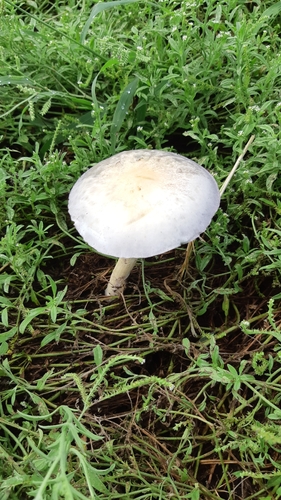
Larger than Panaeolus (5–8 cm cap), golden-yellow to brown, with a darker umbo at center. Stipe stains blue when handled or aged. Pantropical, dung-loving, the most globally distributed psilocybin-active species. 770 records in Guerrero — the most common psychoactive mushroom in the state. Spore print: dark purple-brown to black.
View species detail →The original "Mexican mushroom" Wasson collected with María Sabina in 1955. Small, brown, lacks the cow-dung obligacy of the others — fruits in pastures and grass, especially at elevation. More common in the Sierra Madre del Sur (Guerrero interior) than the coast. 201 Guerrero records. The velada species par excellence.
View species detail →Dark caramel cap with strong bluish-purple staining. Grows on bare disturbed earth — typically along landslides, riverbanks, and erosion scars (hence derrumbe, Spanish for "landslide"). 106 Guerrero records, mostly Sierra Madre interior. The Mazatec name nize applies to this species in the Mixteca-Mazatec ceremonial tradition.
View species detail →Cultural note: the documented Mexican psilocybin tradition (Wasson, 1957; Heim, 1958; Schultes & Hofmann, 1979) is centered in the Mazatec Sierra (Oaxaca) and Sierra Madre del Sur, but the same pasture-dung complex of fungi grows wherever cattle, tropical rain, and grass coincide — including the coastal pastures behind Saladita. Spanish common names in the region: pajaritos (little birds), derrumbes, San Isidros, nize.
Almost nothing is documented here — and that matters.
Fungi records for coastal Guerrero are among the most sparse biodiversity data we have on this site. Between iNaturalist and GBIF, fewer than a handful of observations exist within 50 km of La Saladita for the entire period 2000–2025. That is not because fungi are absent — it is because almost no one has looked.
This page exists to publish whatever has been recorded and to invite more observations. The exact count appears below once the live data loads.
No mycological survey of this coastline exists in any major database. Fruiting season peaks Aug–Oct when the rainy season tapering saturates soil and leaf litter. Three microhabitats: tropical dry forest (dead wood after first June rains), mangrove/lagoon edge (wetter year-round, distinct communities), mycorrhizal dry-forest roots (almost entirely undocumented). iNaturalist/GBIF: near-blank slate. Absence of records = absence of observers, not species.
When fungi fruit
Based on tropical dry forest phenology and the regional rainy-season calendar — not from sufficient observational data, which barely exists for this corridor. Peak fruiting is expected August through October. The shoulder months (July and November) are plausible but uncertain.
Caveat: this calendar is based on regional climate phenology, not from sufficient local observational records. It reflects what should be true given the seasonal cycle — not what has been confirmed in the data.
Common at Saladita
- Fungi (kingdom)Common · Year-round · 53 records
- Trametes sanguineaCommon · Year-round · 26 records
- Hexagonia hydnoidesCommon · Year-round · 21 records
- PolyporaceaeCommon · Year-round · 21 records
- AgaricalesCommon · Jul–Sep · 21 records
Frequency from effort-normalized GBIF + iNaturalist (667 records, 220 species, 2000–2025). September fruiting peak is validated as real — not November tourist-effort artifact. Polypore bracket fungi (Trametes, Hexagonia, Ganoderma) are the most reliably recordable group.
Most species are Rare in the database
25 of 30 documented species have <0.5% of total records and are classified Rare by frequency — not because they are ecologically rare, but because fungi are systematically under-photographed outside peak fruiting windows. The September–October window is when most new species records will be added. Every observation you submit to iNaturalist in rainy season builds the permanent baseline.
What has been recorded
Loading documented taxa from iNaturalist and GBIF…
Do not eat wild fungi without expert identification
This page does not provide any guidance about edibility. Many mushrooms in tropical dry forest environments are toxic, and misidentification based on visual appearance or photographs alone is dangerous. Never consume any wild mushroom unless a qualified mycologist has made a physical identification. The iNaturalist community can assist with identification — that is not the same as safety verification. There are no safe shortcuts to foraging wild fungi.
Recent observations
iNaturalist fungi observations within 50 km of La Saladita, from the last 180 days. Because data is extremely sparse, the window is intentionally wide. Most years this widget will show zero or one record.
Methodology & sources
- iNaturalist: iNaturalist Observations API — taxon_id=47170 (kingdom Fungi), 50 km radius from 17.8375°N, 101.7606°W, quality_grade=research+needs_id. Both research-grade and needs-ID observations are included because research-grade alone is too sparse to be useful.
- GBIF: GBIF Occurrence Search API — taxonKey=5 (kingdom Fungi), bounding box 17.14–18.04°N, -101.90–-100.96°W (~50 km rectangular approximation), years 2000–2025, hasCoordinate=true.
- Seasonal calendar: Based on tropical dry forest phenology and the regional precipitation cycle for coastal Guerrero, not derived from the observational record (which is too sparse to infer seasonality). The Aug–Oct peak is a climate-based inference, not an empirical finding.
- Edibility guidance: None provided, by policy. Fungi identification from photographs alone is unreliable, and this page is not a foraging resource.
- Species counts: The climatology artifact is regenerated periodically by running
scripts/build_mushroom_climatology.py. The live sightings widget queries iNaturalist in real time on each page load.
Data last refreshed: —
Climatology artifact generated: —